
PCI Data Security Standards (DSS) Guide
A practical guide to PCI DSS compliance: security standards, key compliance steps, best practices, and choosing a partner for card payments.
If your business touches credit card data at all, whether you accept it, store it, process it, or pass it along, the Payment Card Industry Data Security Standards (PCI DSS) apply to you. They exist to keep the payment environment safe, and for merchants and service providers that take card payments, compliance isn't optional.
This guide walks through what the standards cover, the steps to become compliant, and how to stay that way once you are.
Overview of PCI DSS
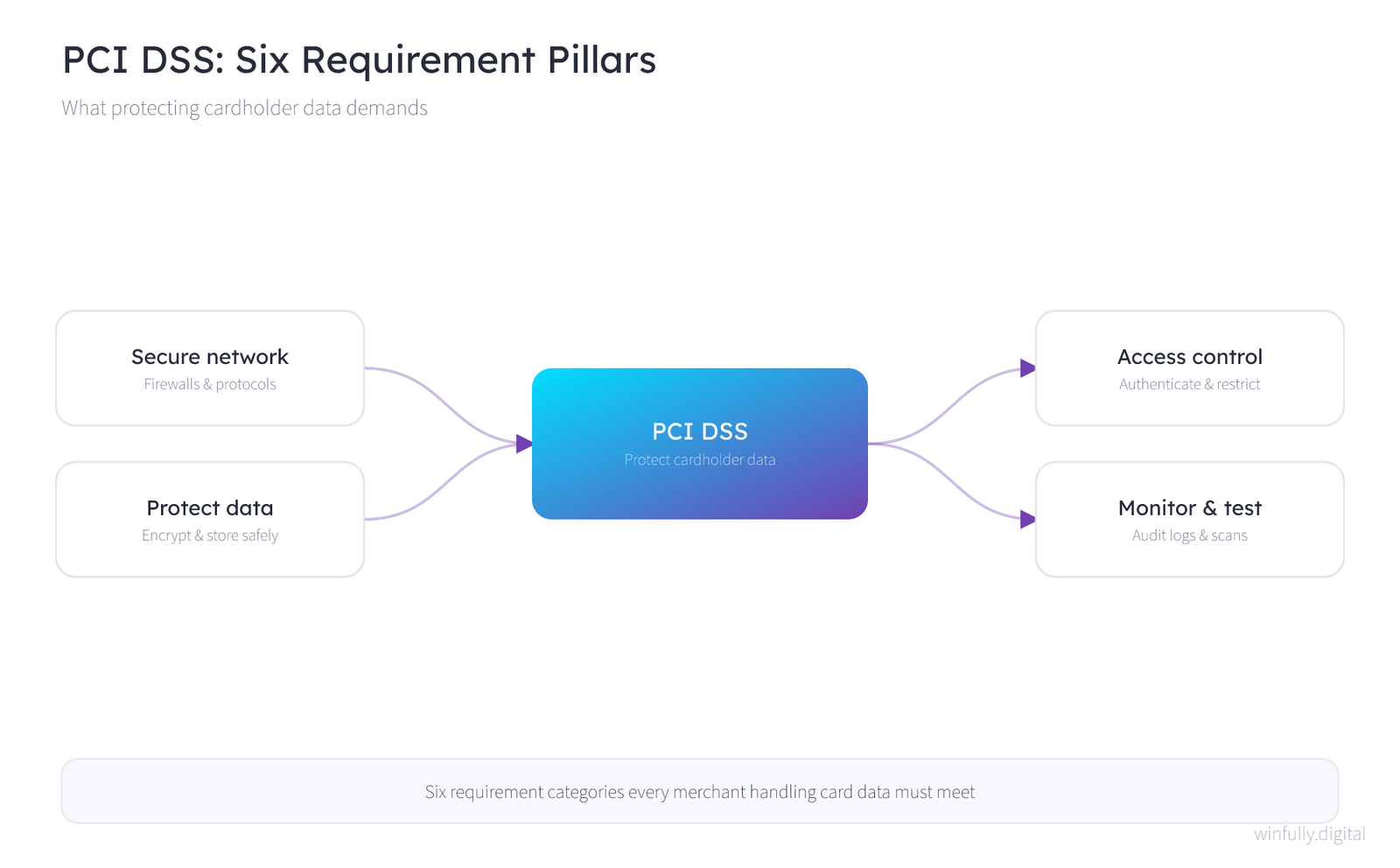
The standards were written by the major card brands, Visa, MasterCard, American Express, and Discover, to keep cardholder data out of the wrong hands. The rules break down into six categories, known as the PCI DSS Requirements:
Build and Maintain a Secure Network
Lock down the network with proper firewall configuration and secure protocols.
Protect Cardholder Data
Keep cardholder information safe through encryption and secure storage.
Maintain a Vulnerability Management Program
Find and fix weaknesses on an ongoing basis, using regular vulnerability scans and penetration testing.
Implement Strong Access Control Measures
Decide who can reach cardholder data, and enforce it with user authentication and access controls.
Regularly Monitor and Test Networks
Watch the network for signs of a breach through routine security audits and log reviews.
Maintain an Information Security Policy
Write down your security policy and make it real, backed by regular employee training and an incident response plan.
Steps for Compliance
Self-Assessment Questionnaire (SAQ)
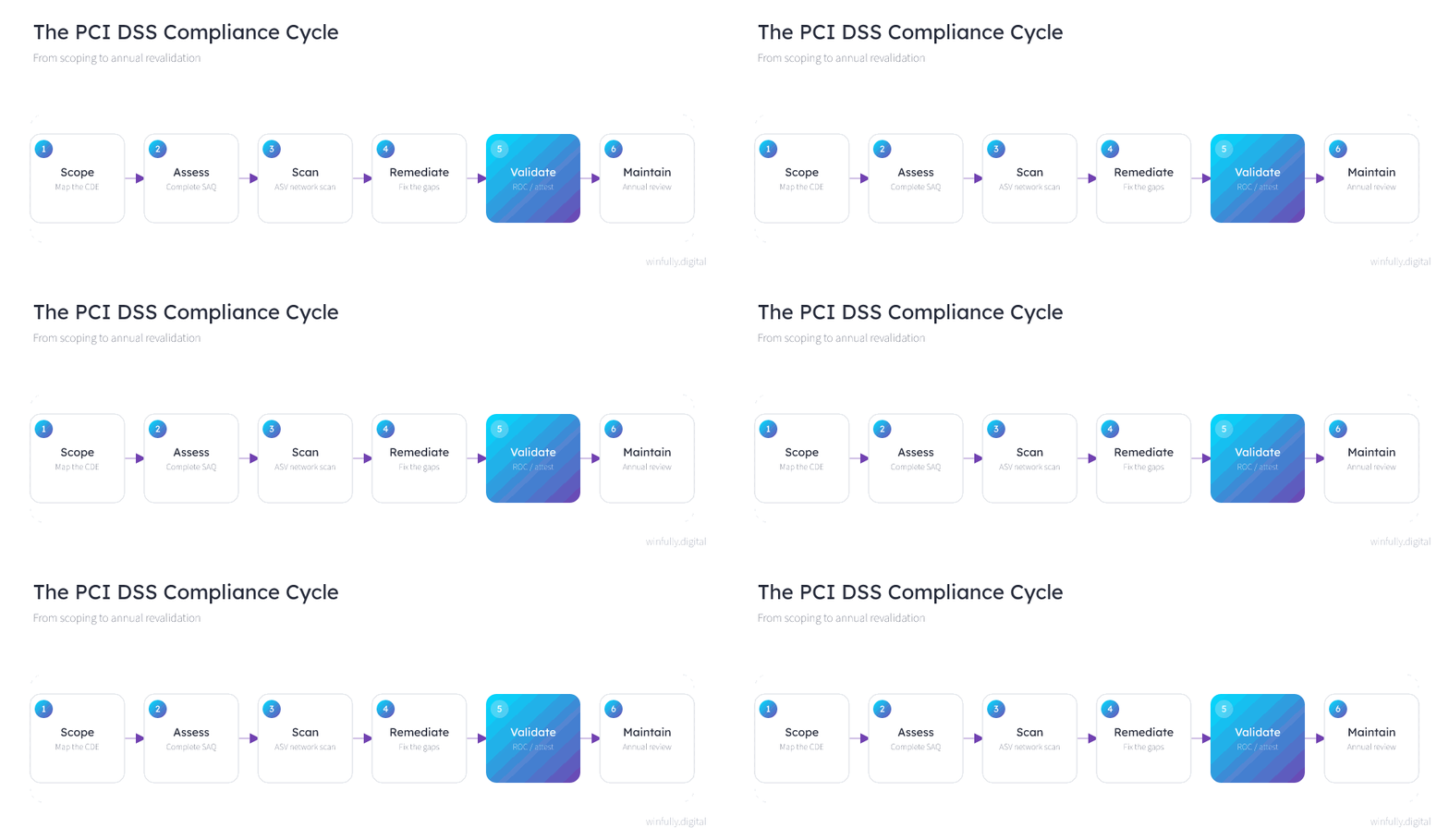
Start with the Self-Assessment Questionnaire (SAQ). It's how you take stock of where you stand and spot the gaps that need closing before anything else.
Network Scanning
Run regular network scans to surface vulnerabilities. These have to be performed by a PCI-approved scanning vendor to count toward compliance.
Compliance Validation
With the SAQ and scans done, you validate that you actually meet the requirements. That happens through a Report on Compliance (ROC) or an on-site assessment.
Annual Compliance
Compliance isn't a one-and-done milestone. Every year you go through it again: a fresh SAQ, another network scan, and validation via a ROC or on-site assessment.
Choose Your Partners Smartly
Choosing a Qualified Security Assessor
A Qualified Security Assessor (QSA) is a certified professional who evaluates your compliance and issues the Report on Compliance. Pick one who knows your industry, has done this before, and has the reputation to back it up.
Choosing an Approved Scanning Vendor
An Approved Scanning Vendor (ASV) is authorized to run the vulnerability scans PCI DSS requires. Look for experience and a solid track record, and confirm the vendor is approved by the PCI Security Standards Council before you sign anything.
Use of Third Party Service Providers/Outsourcing
Outsourcing part of your operation doesn't outsource the responsibility. Any third party that touches your card data has to be PCI DSS compliant too, so only work with providers that are, and keep checking that they stay that way rather than assuming it.
Network Segmentation
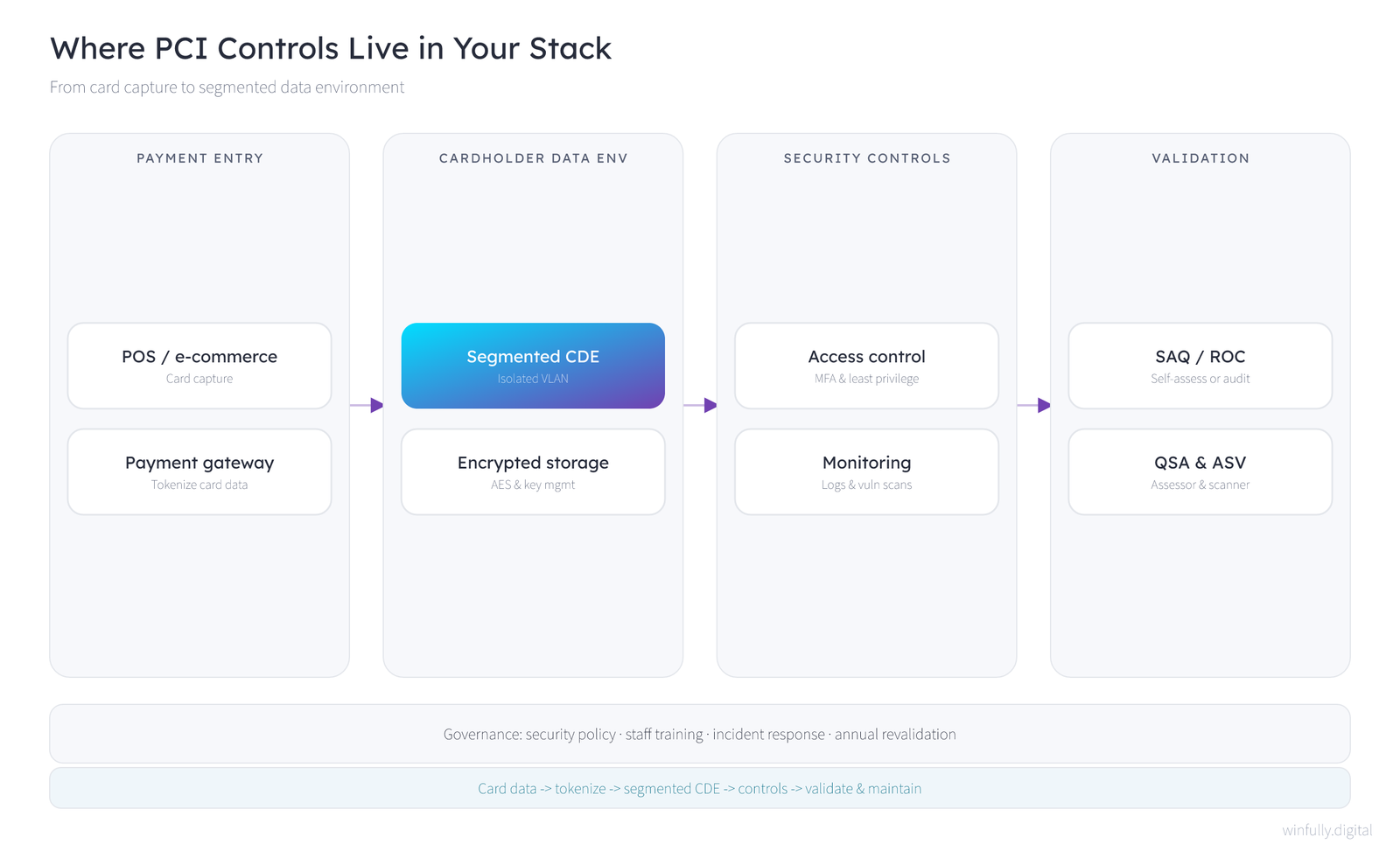
Network segmentation splits your network into smaller, walled-off segments. If a breach happens, segmentation contains the blast radius and makes the source easier to trace. For PCI DSS specifically, it's how you isolate cardholder data from everything else, using firewalls, virtual LANs (VLANs), or other network security technology.
Compliance is best understood as a repeating cycle rather than a one-time project, as the animation below illustrates.
Best Practices for Maintaining Compliance
Review and update security policies
Revisit your policies and procedures on a schedule so they keep pace with current best practices and regulatory changes.
Train employees on security best practices
Make sure staff know how to spot a potential breach and, just as important, how to report it.
Monitor network
Test and watch your networks regularly. Catching a vulnerability before an attacker does is the whole point.
Use secure storage & encryption
Store card data somewhere hardened, whether a secure server or cloud storage, and encrypt it so that even if someone reaches it, they can't read it.
Until next time
More on compliance and security standards in future posts. Keep an eye on the blog.