
Business Architecture: Role In Enterprise Architecture
How business architecture links strategic vision to execution, aligning processes, technology, and people to keep IT and business goals in sync.
After years spent inside business operations and strategy, I keep coming back to one discipline that decides whether an organization actually reaches its goals: business architecture. This post pulls together what I've seen work and why business architecture belongs at the foundation of how a company runs.
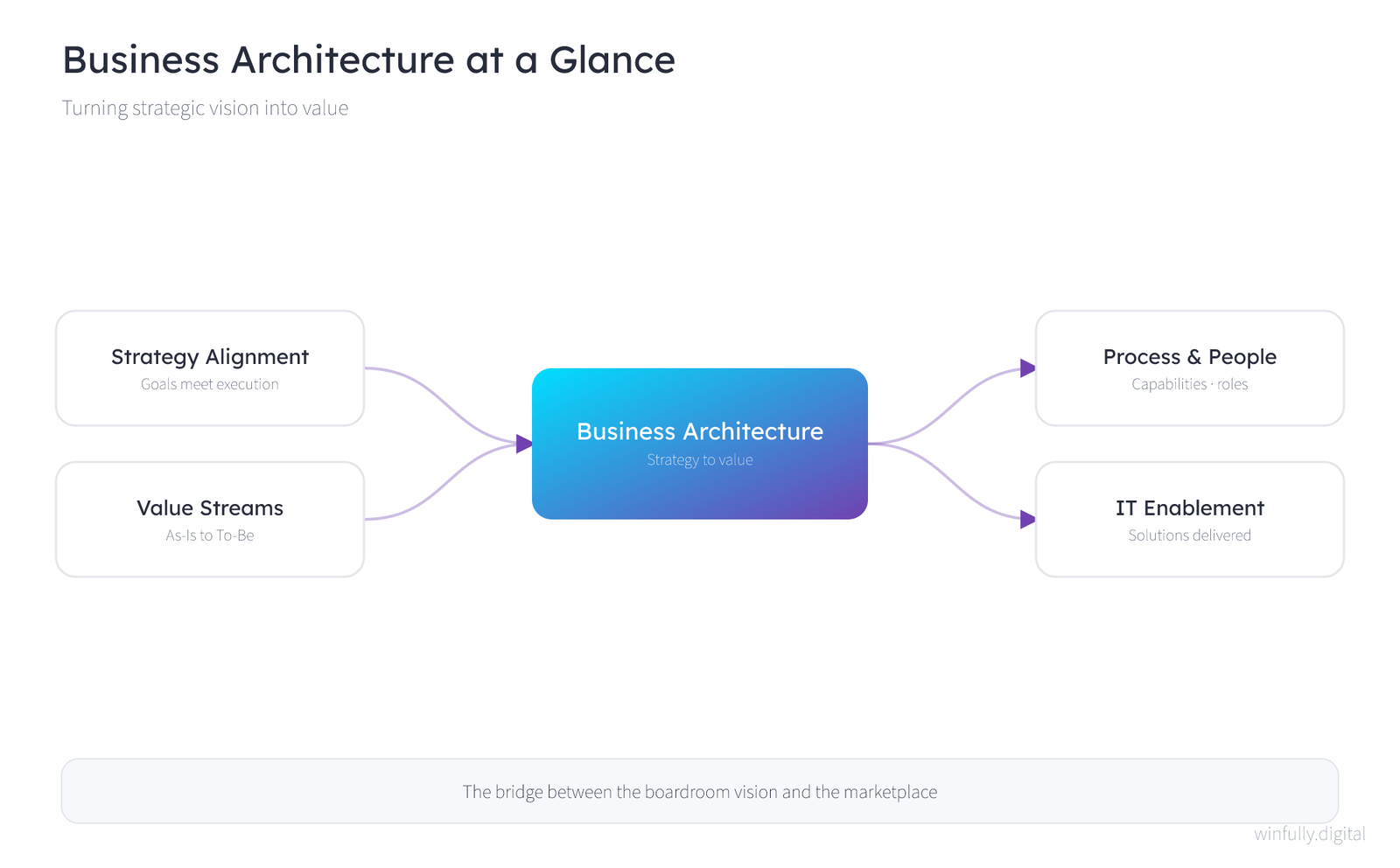
Business architecture turns strategic vision into real value while keeping process, technology, and people in balance. Done well, it connects what leadership intends with what the organization actually delivers, so the path from boardroom decision to market result stays efficient and worth the effort.
What exactly is Business Architecture?
Business architecture is the link between what an organization wants to achieve and the concrete steps it takes to get there. It starts with the company's overarching goals, then works those goals down into plans, value streams, and processes that make them real. Think of it as the blueprint for how the organization operates and delivers value to customers, held together by a deliberate mix of process, people, and technology.
Alignment of Strategy and Execution
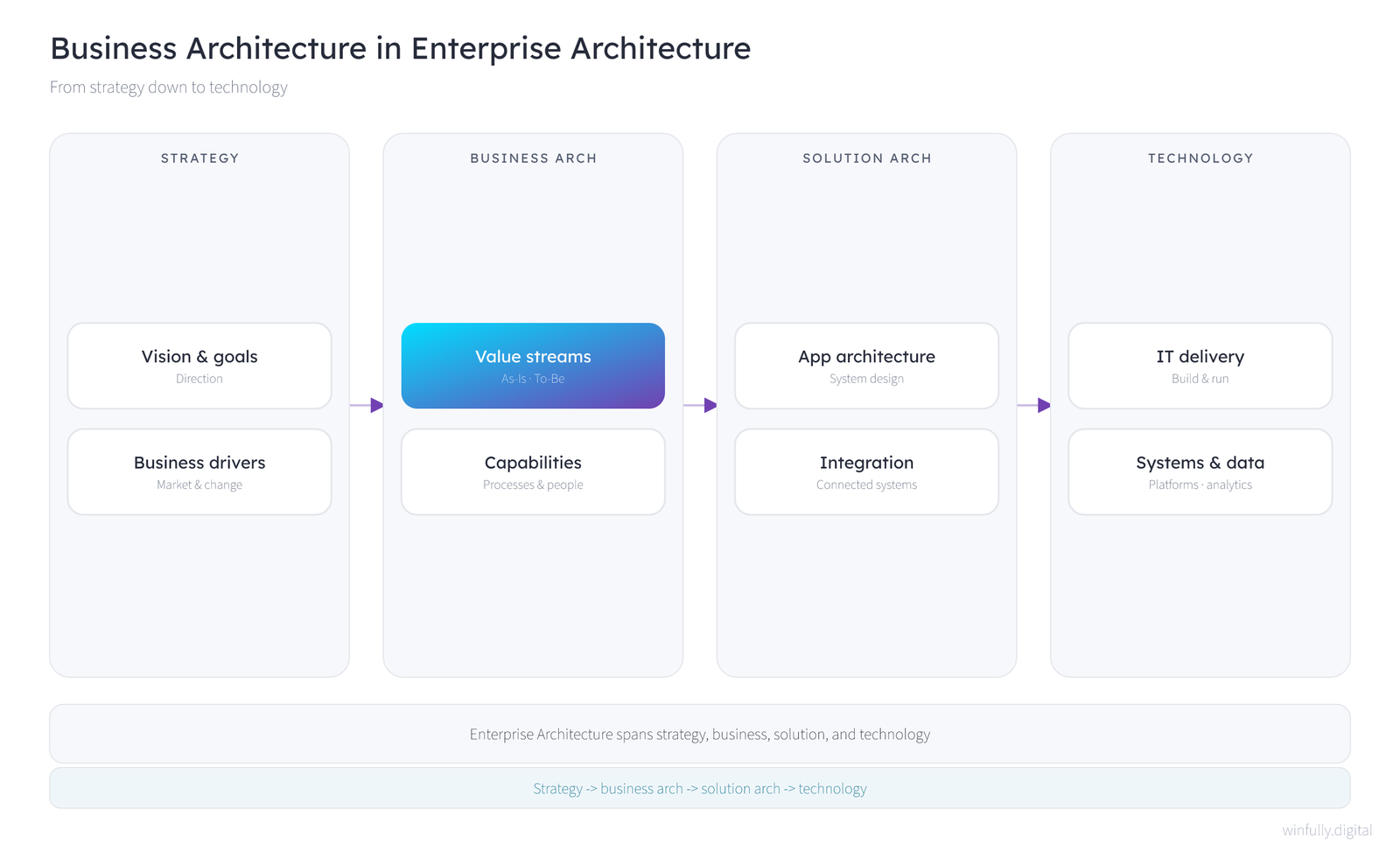
Business architecture keeps a company's strategic intent from getting lost in translation when technology or organizational change enters the picture. It sits inside enterprise architecture and makes sure business objectives and IT initiatives point the same direction. Firms like McKinsey and Henley Business School have long argued that the enterprise architecture function drives the technological change a company needs to compete when everything is digital first.
A Symbiotic Relationship Between Business and IT
Company demands never sit still. New technology, market shifts, regulatory changes, and customer expectations all keep moving, so solution design and delivery have to stay flexible. Business architecture supports that agility by continually aligning two things:
- Changing Business Requirements: New initiatives, projects, and services get mapped against both today's market and where it's heading.
- IT (Information Technology): IT designs and delivers the solutions, and makes sure people, processes, and technology all pull toward the same end goal.
Impact and Transformation in Organizations
Business architecture earns its keep during organizational change, process redesign, and solution improvement. Value stream mapping is central here: it clarifies the 'As-Is' state and helps you sketch the 'To-Be', which in turn produces a backlog of changes worth making.
Processes and systems are being redefined
Business architecture rethinks whole business processes, not isolated tasks. It overlaps heavily with solution architecture, often drawing on the same skills and the same people, and it shapes system and application architectures and the plan for building integrated systems, without being IT-led at its core.
Importance of Business Architecture in Enterprise Architecture
Business architecture is a core part of enterprise architecture. It shapes solution architecture, which then sets the solution boundaries and guides where IT operates. The relationship runs both ways: without business and solution architecture in place, enterprise architecture tends to fall short of what leadership expected from it.
Theory to Practice
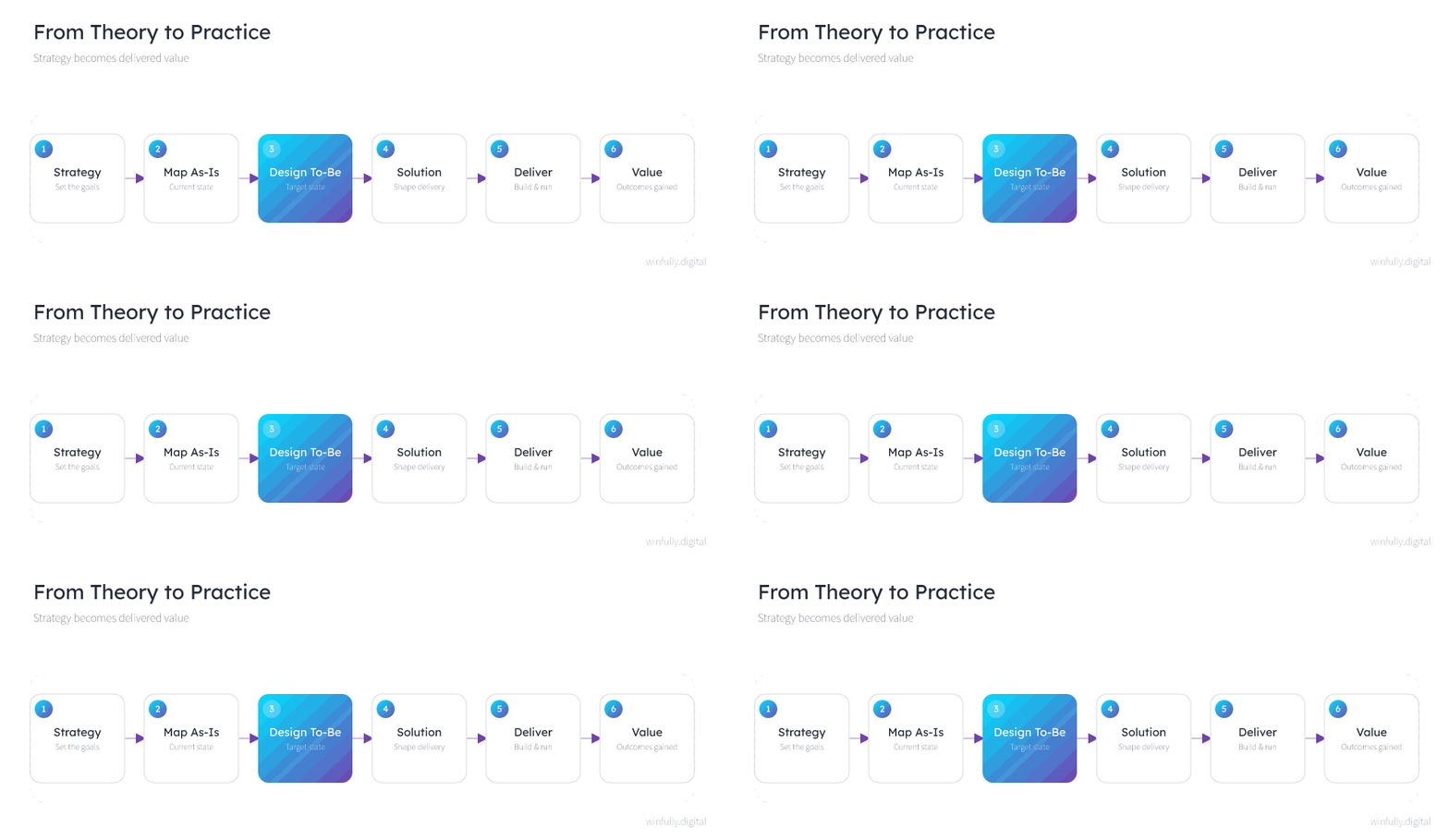
Business architecture is where strategy stops being abstract. It takes high-level intent and turns it into practical, executable steps, and that move from idea to execution is exactly what determines whether an organization meets its goals.
What a Business Architecture Provides to an Organization
- Process Improvements: Identifies process gaps, enabling systematic improvements via Value Stream Mapping.
- Cycle and Lead Time Reduction: This goal is to shorten the time it takes from project inception to market, hence improving Time to Market (TTM).
- Quality Improvement: Improves the quality of products, projects, and services, hence increasing value and customer satisfaction.
- Cost-effectiveness: Assists in lowering operating costs through enhanced processes and resource usage.
- Customer Satisfaction: Influences and improves customer satisfaction by ensuring outputs effectively fulfill customer needs.
The animation below traces this theory-to-practice path, showing how strategy is turned into delivered value one stage at a time.
Conclusion
A disciplined, structured approach to business operations isn't optional anymore. Business architecture is more than a methodology; it keeps an organization's direction tied to its strategic goals and improves everything from process design to customer satisfaction along the way. Paired with IT and enterprise architecture, it produces a business model that is coherent, agile, and quick to respond, which is what it takes to stay ahead in a complicated economy.
What's next for Business Architecture
Technology keeps moving and business conditions keep shifting, which only makes business architecture more valuable. Organizations that invest in the discipline adapt faster, spot opportunities sooner, and hit their strategic targets more consistently.
The tools will keep evolving too. Business architecture is already getting closer to AI, machine learning, and data analytics, and that shift gives business architects sharper insight, better forecasting, and the ability to make decisions backed by data rather than instinct, all while staying tied to the organization's strategic vision.