Optimizing RCM using Medical Coding
How accurate medical coding drives healthcare reimbursement, and how NLP and machine learning boost coding accuracy and revenue cycle efficiency.
Medical coding is one of the more demanding jobs in healthcare, and one of the most consequential. Get it right and providers get paid correctly, the revenue cycle runs smoothly, and you stay on the right side of federal and state regulations. Get it wrong, or slow, and all three suffer. Done by hand, coding is painstaking and easy to trip up. That's where technology is changing the picture, sharpening accuracy, speeding the work, and ultimately supporting better patient care. This piece looks at how technology is reshaping medical coding, where it's being used, and how our healthcare IT consulting firm, WinFully Information Systems, helps organizations tighten up their coding and revenue cycle management.
What is medical coding?
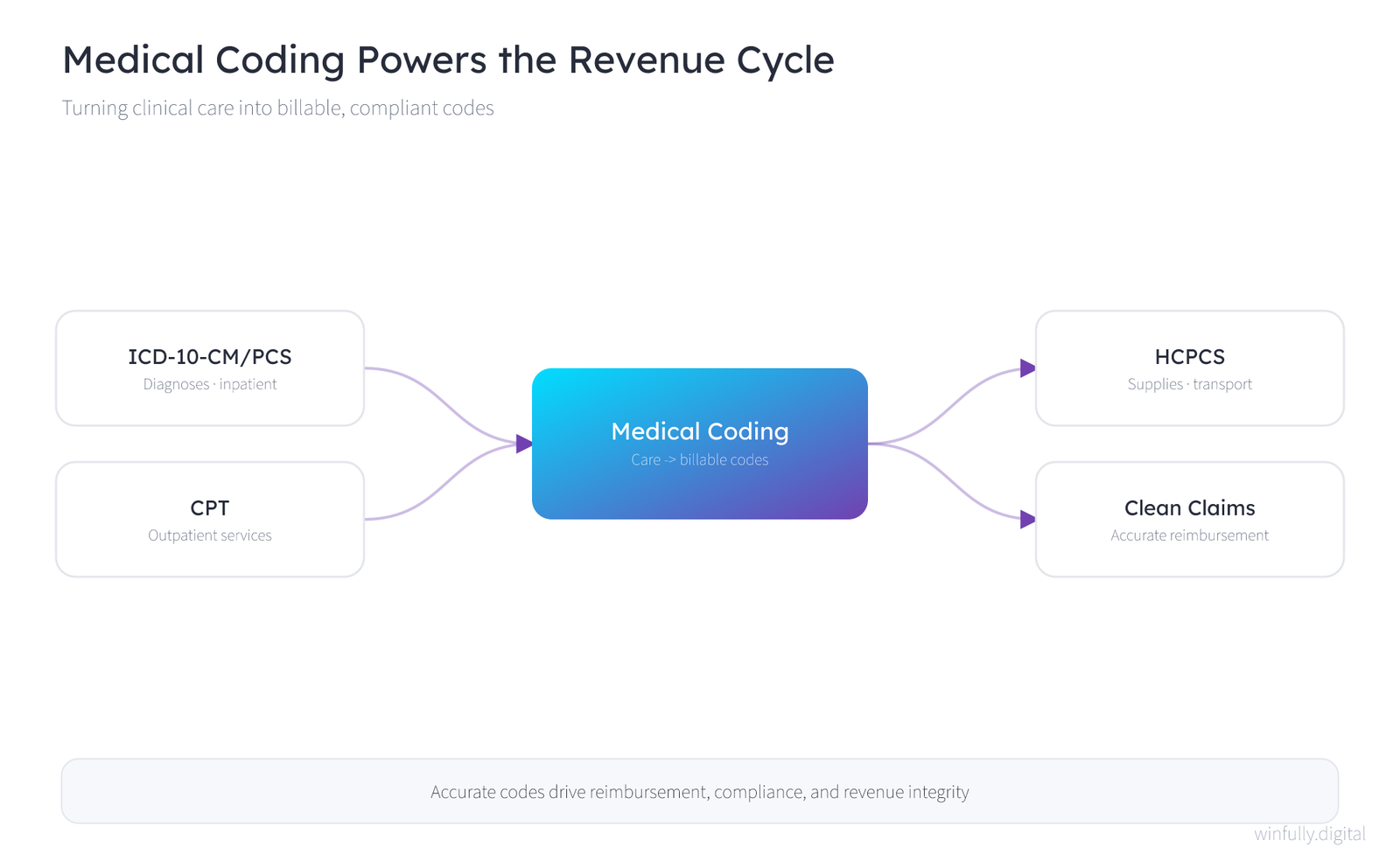
Medical coding turns diagnoses, procedures, and other services into alphanumeric codes. Those codes drive billing and reimbursement, but they also feed research and quality improvement. Three main coding systems do the bulk of the work:
- ICD-10-CM/PCS Coding: This type of coding is used to describe medical diagnoses and inpatient procedures. ICD-10-CM codes are used to describe diagnoses, while ICD-10-PCS codes are used to describe inpatient procedures.
- CPT Coding: Current Procedural Terminology (CPT) codes are used to describe outpatient medical procedures and services. These codes are maintained by the American Medical Association and are updated annually to reflect changes in medical technology and practices.
- HCPCS Coding: Healthcare Common Procedure Coding System (HCPCS) codes are used to describe medical services and procedures that are not covered by CPT codes. These codes are used for services such as ambulance transportation, durable medical equipment, and medical supplies.
Each system takes real training to use well, plus a working knowledge of medical terminology, anatomy, and disease processes. Coders have to be both skilled and precise, because the wrong code means the wrong bill, and the wrong reimbursement.
Mapping to Integration: How to Standardize Medical Codes in EHRs
Standardizing codes inside electronic health records (EHRs) usually runs through five steps:
- Mapping codes: EHRs run on standard code sets like the International Classification of Diseases (ICD) and Current Procedural Terminology (CPT), but providers often carry their own internal codes and shorthand. The first job is mapping those local codes to the right standard ones.
- Data normalization: With the codes mapped, the data gets normalized, entered in a consistent format, using standard terminology, abbreviations, and coding rules.
- Quality assurance: Next comes review for accuracy and completeness, confirming that everything needed is captured, the codes are correct, and the data matches the patient's record.
- Data integration: The clean, standardized data goes into the EHR, which may mean building new templates, forms, or fields, and it has to be searchable and easy for providers to reach.
- Staff training: Finally, staff learn the new system and, just as important, why standardized coding matters.
None of this is quick or cheap. But standardized codes are what make accurate billing, better patient care, and useful research and population health work possible, and that payoff is real for providers and patients alike.
The Technological Impact on Medical Coding
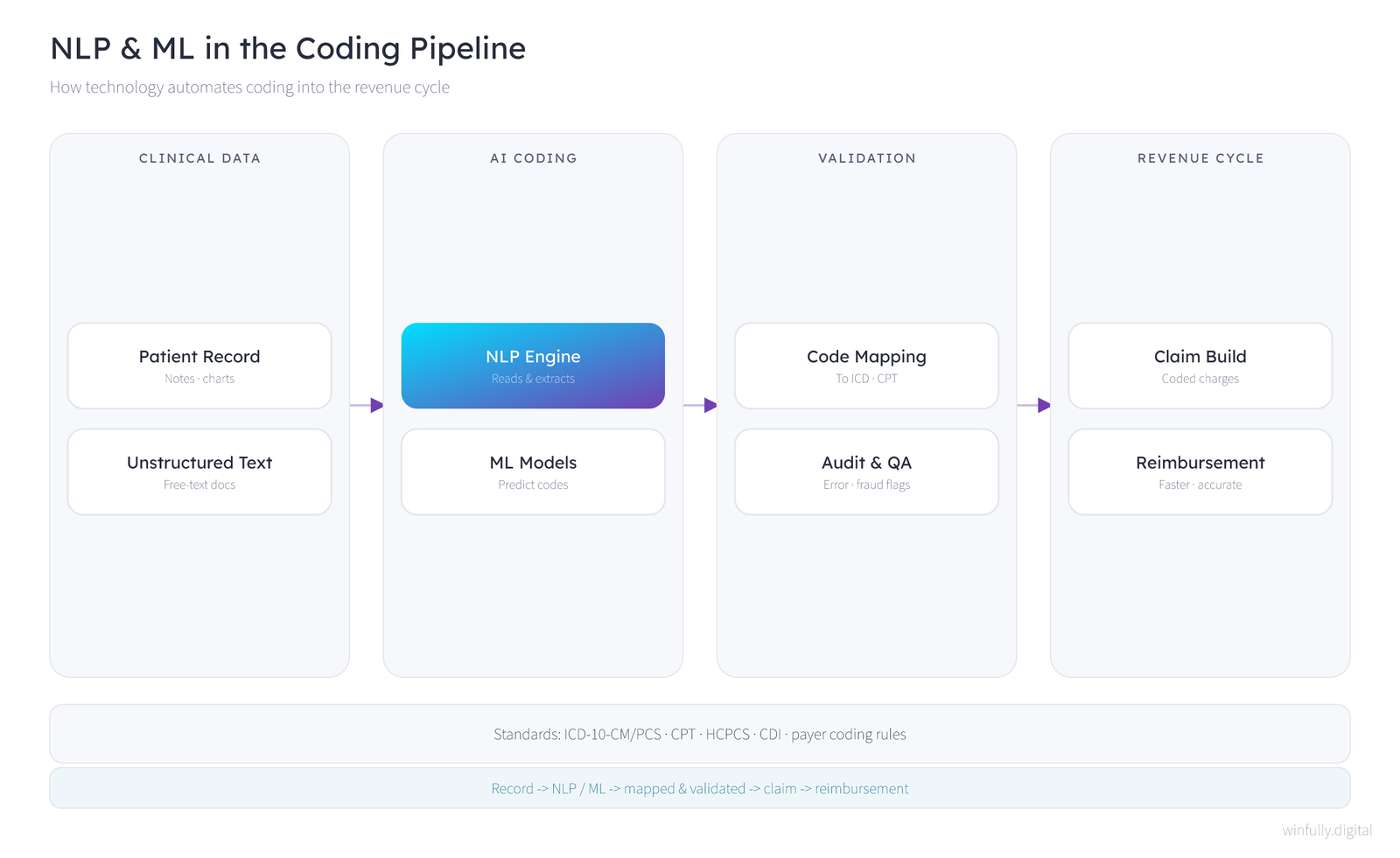
One of the biggest challenges with traditional medical coding processes is the time-consuming and error-prone nature of the process. Medical coders must manually read through patient records and identify the relevant codes for each procedure, which can be a time-consuming and error-prone task. However, the latest advancements in healthcare technology, such as NLP and Machine Learning, are helping to automate this process and improve accuracy.
NLP is a branch of artificial intelligence that focuses on helping machines understand human language. With NLP, machines can process and analyze unstructured data, such as patient records, and identify key information such as diagnoses, treatments, and patient demographics. This technology can be used to automatically identify codes for medical procedures, significantly reducing the time and effort required for manual coding processes.
Machine Learning is another technology that has the potential to revolutionize medical coding processes. With machine learning, computers can learn from past data and identify patterns that can be used to make predictions about future events. This technology can be used to identify coding errors, flag potential fraud or abuse, and optimize the coding process to improve accuracy and revenue optimization.
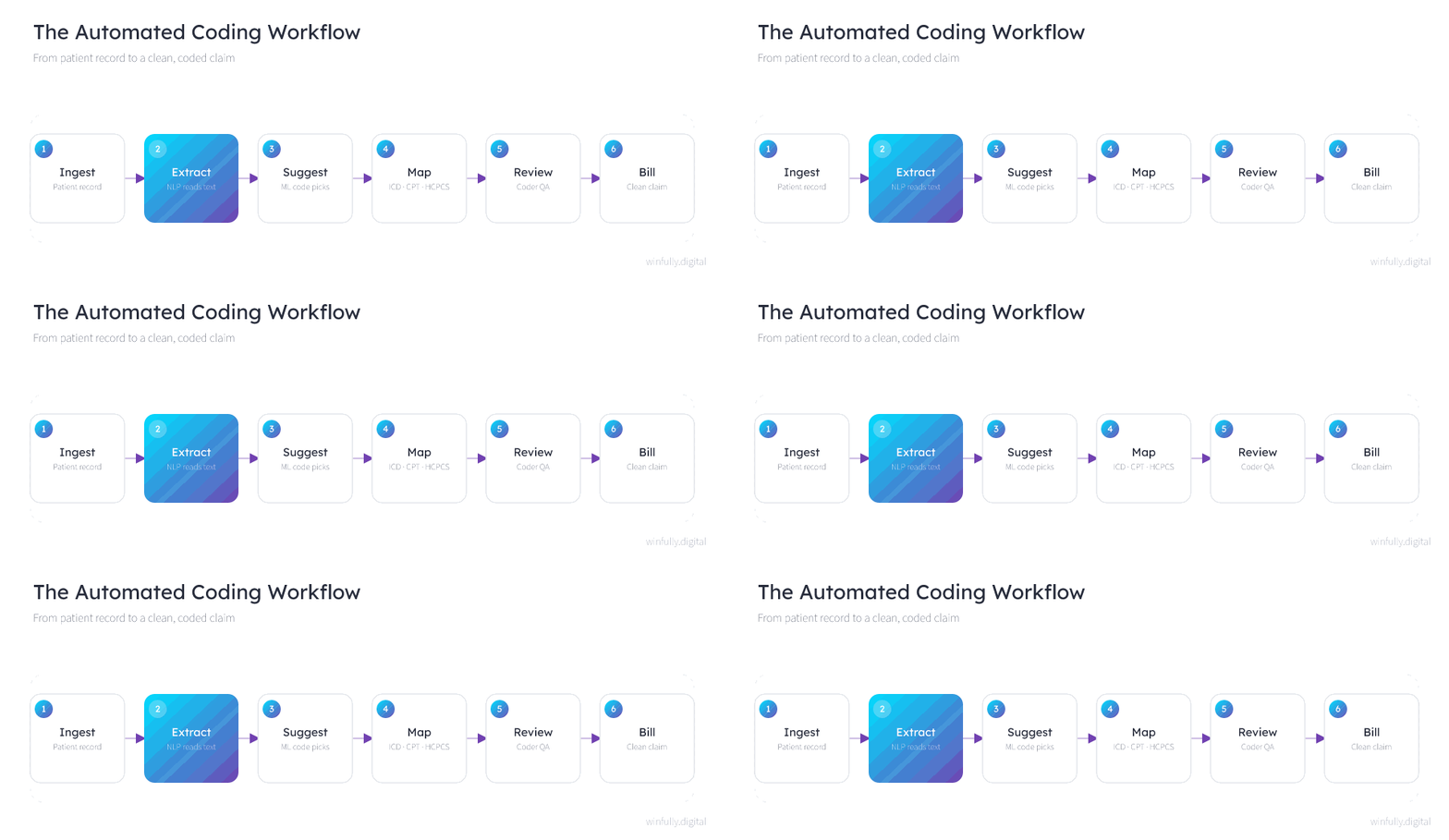
The animated workflow below shows how an automated coding process moves from a raw patient record to a clean, coded claim.
Use Cases for Medical Coding Technology
Now that we have explored the impact of healthcare technology on medical coding, let's take a closer look at some use cases to help you understand how your organization can benefit from these advancements.
- Automated Medical Coding: With NLP and Machine Learning, medical coders can automate the coding process, reducing the time and effort required to manually identify codes for each procedure. This can help healthcare providers save time and reduce errors in the coding process, leading to more accurate and timely reimbursement.
- Medical Coding Audits: With Machine Learning, healthcare providers can analyze past coding data to identify coding errors, flag potential fraud or abuse, and optimize the coding process to improve accuracy and revenue optimization. This can help providers identify areas for improvement and make changes to optimize revenue and improve the overall coding process.
- Clinical Documentation Improvement: NLP technology can be used to improve clinical documentation by automatically identifying diagnoses, treatments, and patient demographics from unstructured data such as patient records. This can help healthcare providers improve the accuracy of their clinical documentation, leading to more accurate coding and improved revenue optimization.
- Revenue Cycle Management: By automating the medical coding process and using machine learning to analyze past data, healthcare providers can optimize their revenue cycle management processes to improve accuracy and revenue optimization. This can help providers identify potential areas for improvement and make changes to optimize revenue and improve the overall revenue cycle.
At WinFully Information Systems, we understand the importance of accurate medical coding and revenue optimization in the healthcare industry. That's why we offer a range of healthcare IT consulting services to help healthcare providers optimize their medical coding processes and take advantage of the latest advancements in healthcare technology.
Our team of experts can help you identify areas for improvement in your medical coding process and implement solutions to reduce errors and optimize revenue. We can also help you implement NLP and Machine Learning technologies to automate the coding process and improve accuracy.
In conclusion, the healthcare industry is evolving rapidly, and technology is playing a critical role in advancing medical coding practices. By embracing new tools and techniques, medical coders can significantly improve the accuracy of their work, which can have a significant impact on both revenue and patient care. At WinFully Information Systems, we understand the importance of staying on the cutting edge of technology, and we are dedicated to providing innovative solutions to help our clients optimize their medical coding and revenue cycle management processes. By working together, we can create a more efficient, accurate, and cost-effective healthcare system that benefits everyone involved, from patients to healthcare providers and payers.