
RCM Optimization for Value-Based Care in Healthcare
How revenue cycle management optimization supports value-based care, helping providers adopt new payment models, quality outcomes, and technology.
As healthcare keeps moving toward value-based care, managing the revenue cycle gets harder. The old playbook doesn't fit a world where payment follows outcomes rather than volume. To keep revenue healthy under these models, organizations have to adopt new payment arrangements, put quality and outcomes first, and lean on technology that streamlines the billing side. This post walks through what separates the practices that thrive from the ones that struggle, and lays out concrete strategies for getting your revenue cycle in shape. Done right, this work protects both your finances and your patients, and it usually lifts operational efficiency and patient satisfaction along the way.
Understanding Value-Based Care
Value-based care pays providers for the quality and effectiveness of the care they deliver, not the number of services they bill. The point is better patient outcomes, lower costs, and higher-quality care overall, and it replaces the fee-for-service logic that rewarded volume for its own sake.
- Tuning your revenue cycle to value-based goals strengthens financial performance.
- Knowing your own RCM well leads to smarter decisions about how care gets financed.
- Get these practices right and you tend to see gains on both fronts at once, patient care and the bottom line.
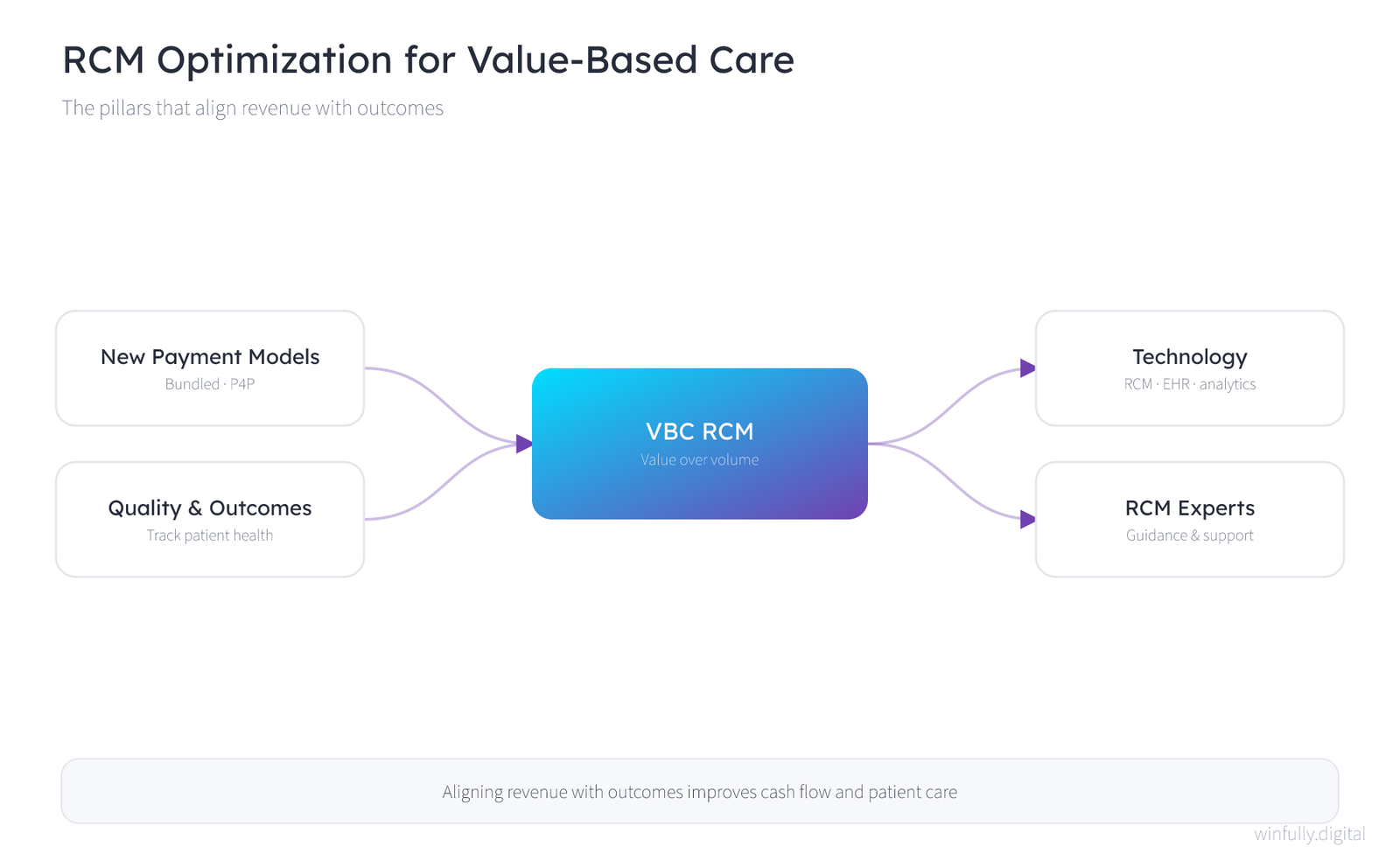
RCM Optimization Strategies for Value-Based Care
Getting the revenue cycle right is what lets an organization actually thrive under value-based care rather than just survive it.
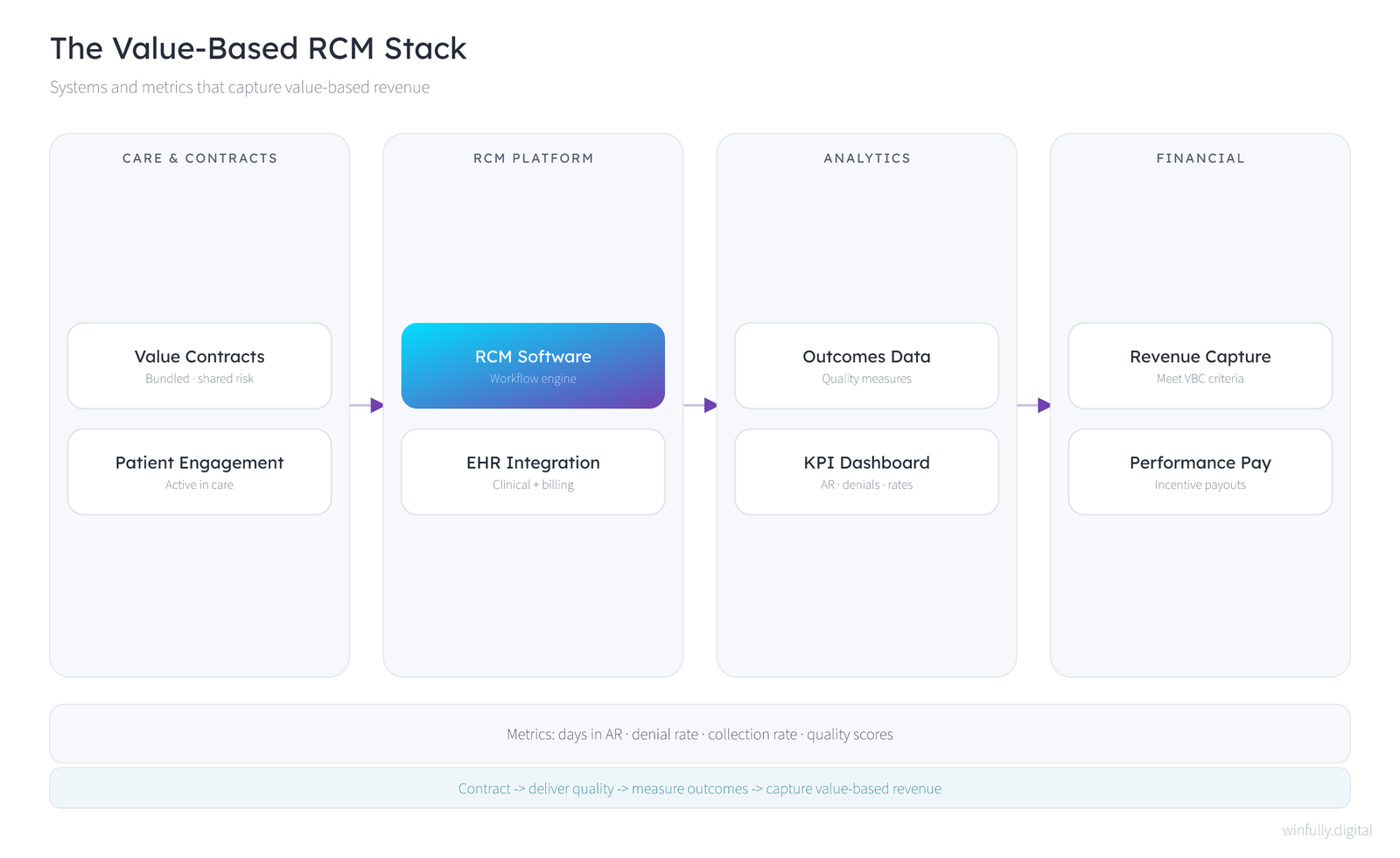
Key Considerations for RCM in Value-Based Care
A few things deserve focus as you build out an RCM approach for value-based care. Treat this as ongoing work, not a one-time setup, and revisit it regularly to make sure it still fits how you're being paid. Done well, it shapes both your financial health and the service your patients receive.
1. Embracing New Payment Models
New payment models only work when they're baked into daily operations, not bolted on at the edges. Bundled payments and pay-for-performance arrangements ask providers to think in terms of value rather than volume, and to coordinate care more closely across teams. Lean into that shift and you improve both the quality and efficiency of care while keeping revenue steady.
2. Focusing on Quality and Outcomes
Value-based care rewards quality and outcomes, so the work is to measure and track how patients actually do, and to deliver care that moves those numbers. Hit the marks the payment model asks for, and revenue capture follows. It's also where operational efficiency and patient satisfaction tend to improve together.
3. Leveraging Technology Solutions
The right technology is what makes the rest of this manageable. Revenue cycle management software, electronic health records (EHRs), and data analytics tools let you capture and manage data more efficiently, tighten up billing and coding accuracy, and see how the revenue cycle is really performing. That combination reduces administrative load, improves cash flow, and keeps you ready for the demands of value-based payment. Just treat it as a living effort: review your progress on a regular cadence so you stay compliant as regulations change and can adjust when something isn't working.
4. Partnering with RCM Experts
You don't have to figure all of this out alone. Experienced RCM partners can pinpoint where you're losing ground, recommend the right tools, and stay on to support and refine the process as you go.
Strategies for Optimizing RCM in Value-Based Care
Keeping the revenue cycle sharp is also part of staying compliant as regulations shift. With that in mind, here are the strategies worth prioritizing.
1. Establishing Clear Quality and Outcomes Goals
Set quality and outcomes goals that line up with your mission, then track them. Clear targets, checked regularly, are how you know the care you're delivering actually meets what patients need.
2. Implementing Technology Solutions
Put the tools to work: RCM software, EHRs, and data analytics. They help you capture and manage data more efficiently, improve billing and coding accuracy, and give you real visibility into revenue cycle performance. There's an upfront cost, but the long-term financial return usually more than covers it.
3. Providing Ongoing Staff Training
Bringing in RCM experts is a good way to learn the best practices worth adopting. Beyond that, your own people need ongoing training. Everyone should understand the new payment models, the quality metrics, and the systems you're rolling out, from the EHR itself to coding and billing rules to the reporting and analytics tools. When the whole team is on the same page, they can pull in the same direction and keep the revenue cycle running well.
4. Engaging Patients in their Care
Get patients involved in their own care and encourage them to take an active role. That means explaining their conditions in terms they understand, sending billing statements that are actually clear, and nudging them to stick with their treatment plans. Engaged patients have better outcomes, and along the way you write off less bad debt and steady your revenue.
5. Tracking and Analyzing Key Performance Metrics
Watch the metrics that matter: days in accounts receivable, claim denial rates, and collection rates. Reading these trends shows you where to improve, lets you make decisions from data rather than instinct, and tells you whether your improvement efforts are actually working.
6. Partnering with RCM Experts
Organizations that keep the revenue cycle in good shape adapt to value-based care far more easily than those scrambling to catch up. Experienced RCM partners speed that up: they find where you're leaking value, recommend the right tools, and stick around to support and refine the work over time.
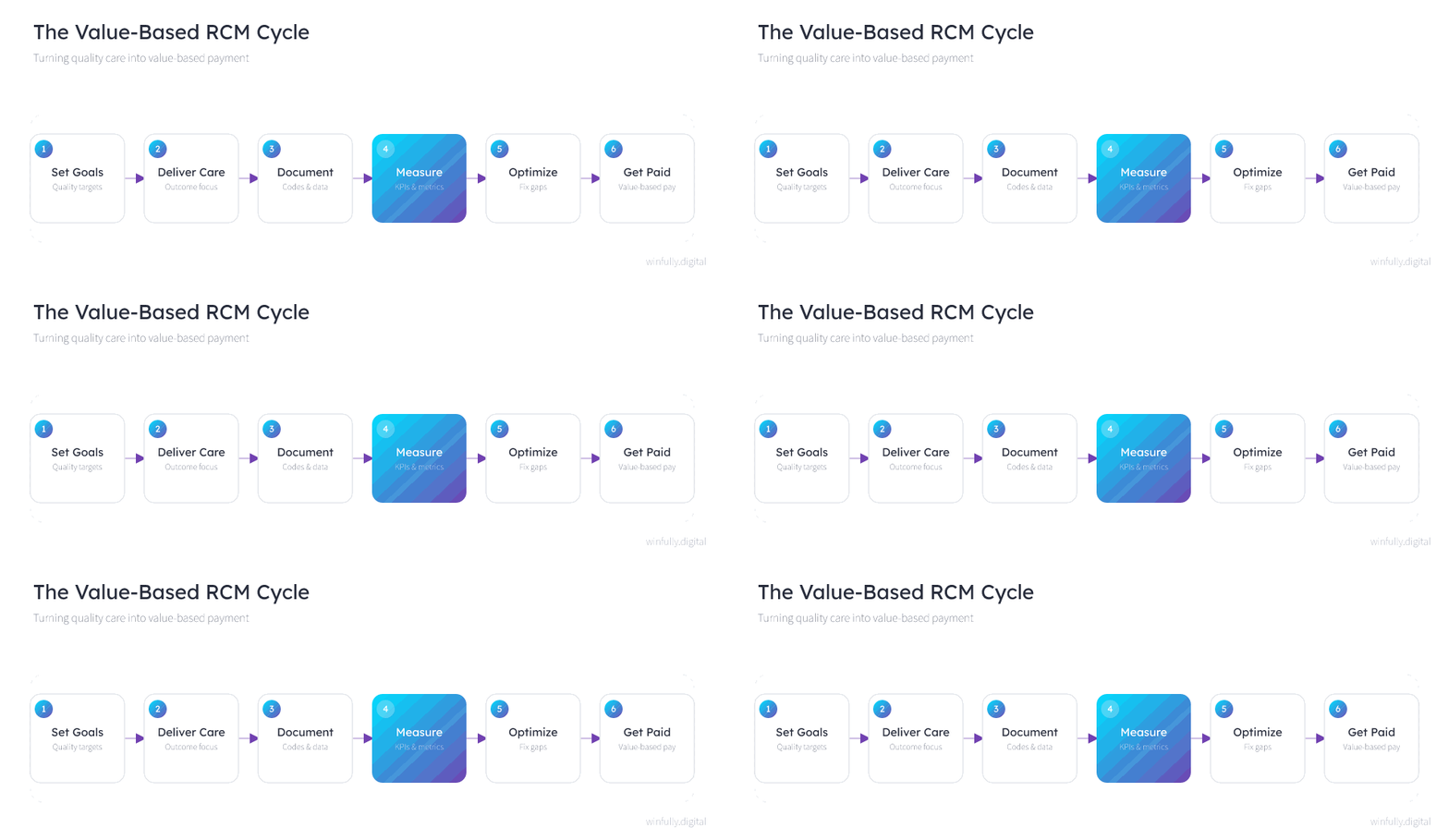
The animated cycle below shows how a value-based RCM process turns quality care into value-based payment.
Conclusion
As value-based care becomes the norm, organizations that fix their revenue cycle are the ones that come out ahead. Adopt the new payment models, keep quality and outcomes front and center, put the right technology in place, and bring in the expertise you need, and better financial results follow. This is how healthcare systems get more out of what they already have. Contact us to talk about how our team can help you tune your revenue cycle and succeed under value-based care.