
Technology to Improve the Patient's Financial Experience
How technology improves the patient financial experience with transparent billing, streamlined admin processes, and virtual care that cuts stress.
For most patients, the confusing part of healthcare isn't the medicine, it's the bill. Technology can fix a lot of that: easier access to their records, clearer billing, simpler ways to handle insurance and payments, and less administrative drag for the provider on the other end.
Tools that give people a personalized cost estimate up front, or point them to financial assistance, take much of the anxiety out of the process. The through-line is transparency. When the money side is clear and manageable, the whole experience feels better.
Here's where technology makes the biggest difference:
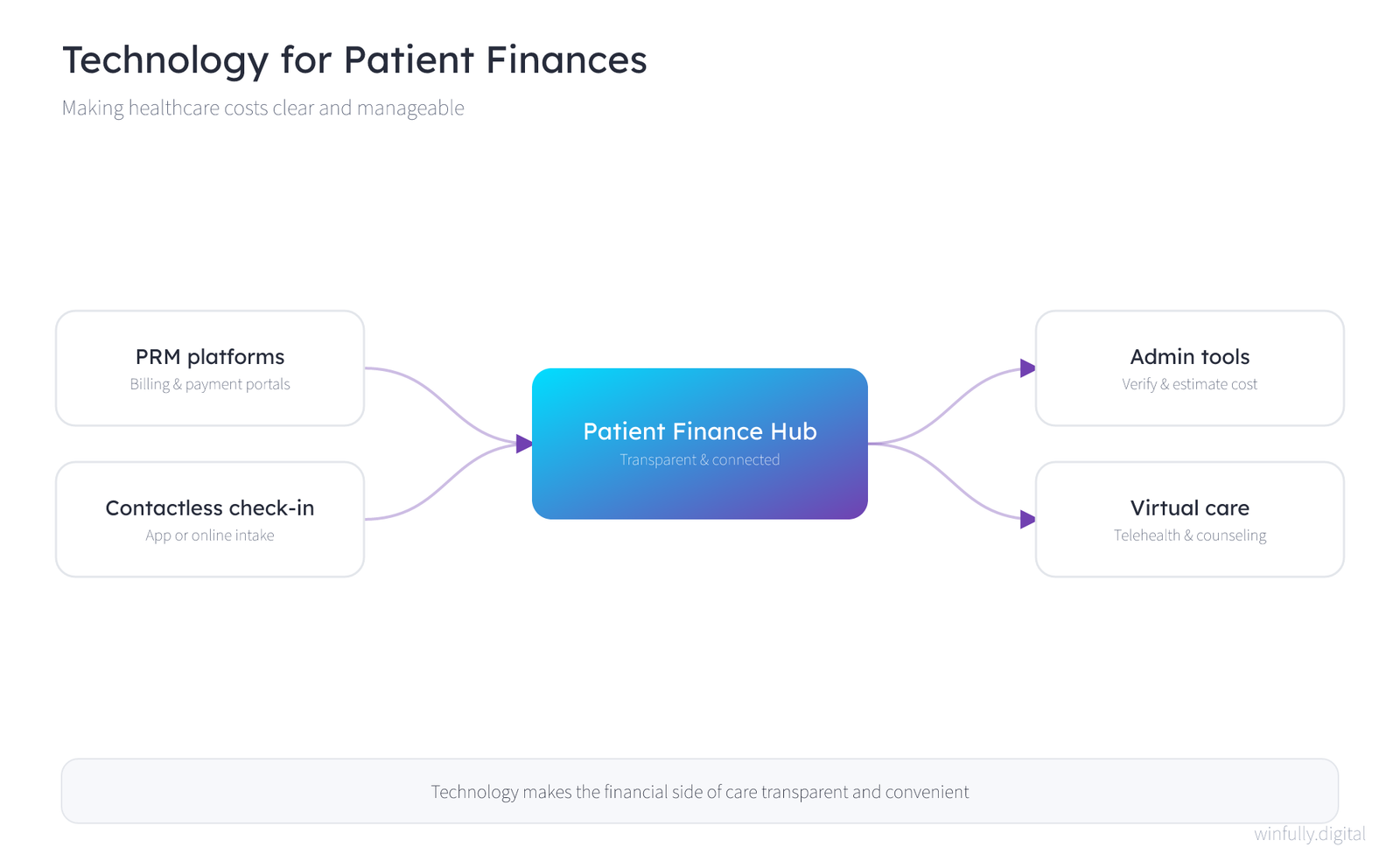
Patient relationship management platforms
Patient Relationship Management (PRM) platforms put billing and insurance details in one place, with online portals for paying bills and booking appointments. They can also show personalized cost estimates, surface financial assistance options, and let patients review their statements, which cuts down on both confusion and stress.
Patients get a clear view of what they owe and why, and providers spend less on the administrative back-and-forth that usually surrounds billing.
Contactless check-in
Contactless check-in lets patients handle arrival from their phone, no front-desk line, no shared kiosk. Through an app or web portal, they confirm appointment details and update insurance or billing information before they walk in.
It saves time, cuts down on data-entry errors, and, since COVID-19, gives people a way to check in without the exposure risk that comes with a crowded waiting room.
Tools that streamline administrative processes
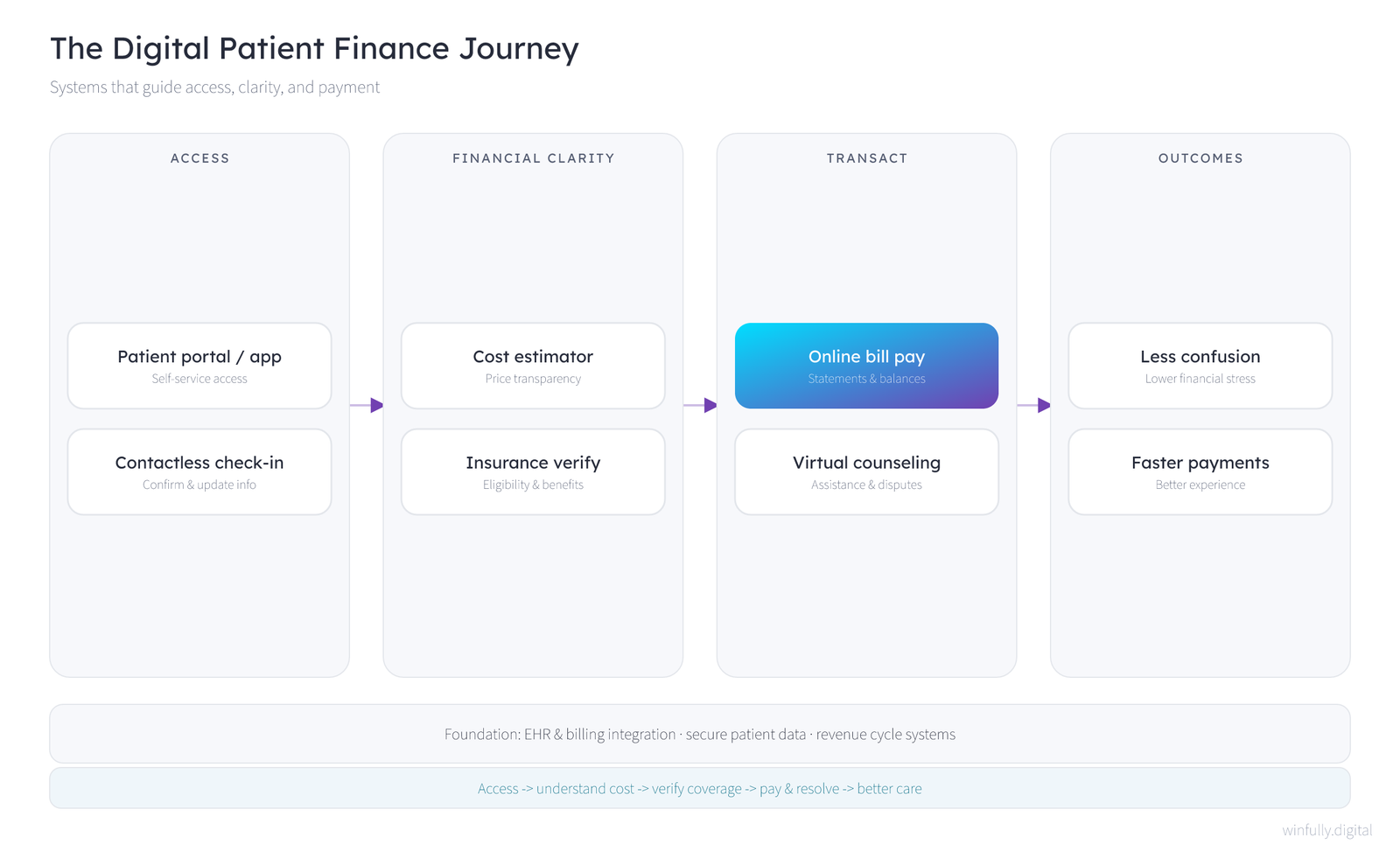
A handful of tools take the friction out of the administrative side and, with it, a lot of patient frustration:
- Online Bill Payment and Financial Portals – Patients can access and pay their bills online and view their medical statements, insurance balances, and claims, which can save them time and reduce the need to wait on the phone to make payments.
- Electronic insurance verification – Electronic insurance verification allows healthcare providers to quickly and easily verify a patient's insurance coverage, which can help to reduce billing errors and ensure that patients are aware of their financial responsibilities.
- Cost and price transparency tools – These tools provide patients with personalized cost estimates and financial assistance options. It can help them to reduce confusion and financial stress.
- Eligibility and benefit check tools – These tools help to check the patient's insurance coverage and assist patients with understanding their benefits.
Together, these tools make the financial side of care more transparent and a good deal easier to manage.
Virtual technology for contactless healthcare experience
Virtual tools help on the financial side in a few distinct ways:
- Virtual consultations: Telemedicine and virtual consultations can allow patients to have virtual appointments with their healthcare providers. It can reduce the need for in-person visits, lower out-of-pocket expenses for patients, and make healthcare more accessible for patients in remote areas.
- Virtual financial counseling: Financial counselors can conduct virtual meetings with patients to provide them with personalized cost estimates and financial assistance options. It helps the patients to understand their insurance benefits and coverage.
- Virtual bill review and dispute resolution: Patients can review and dispute their bills virtually through online portals, which can save them time and reduce the need for in-person meetings. It can make the process of bill review and dispute resolution more efficient and accessible.
The common thread is access: virtual options make care more reachable, more convenient, and easier to understand financially.
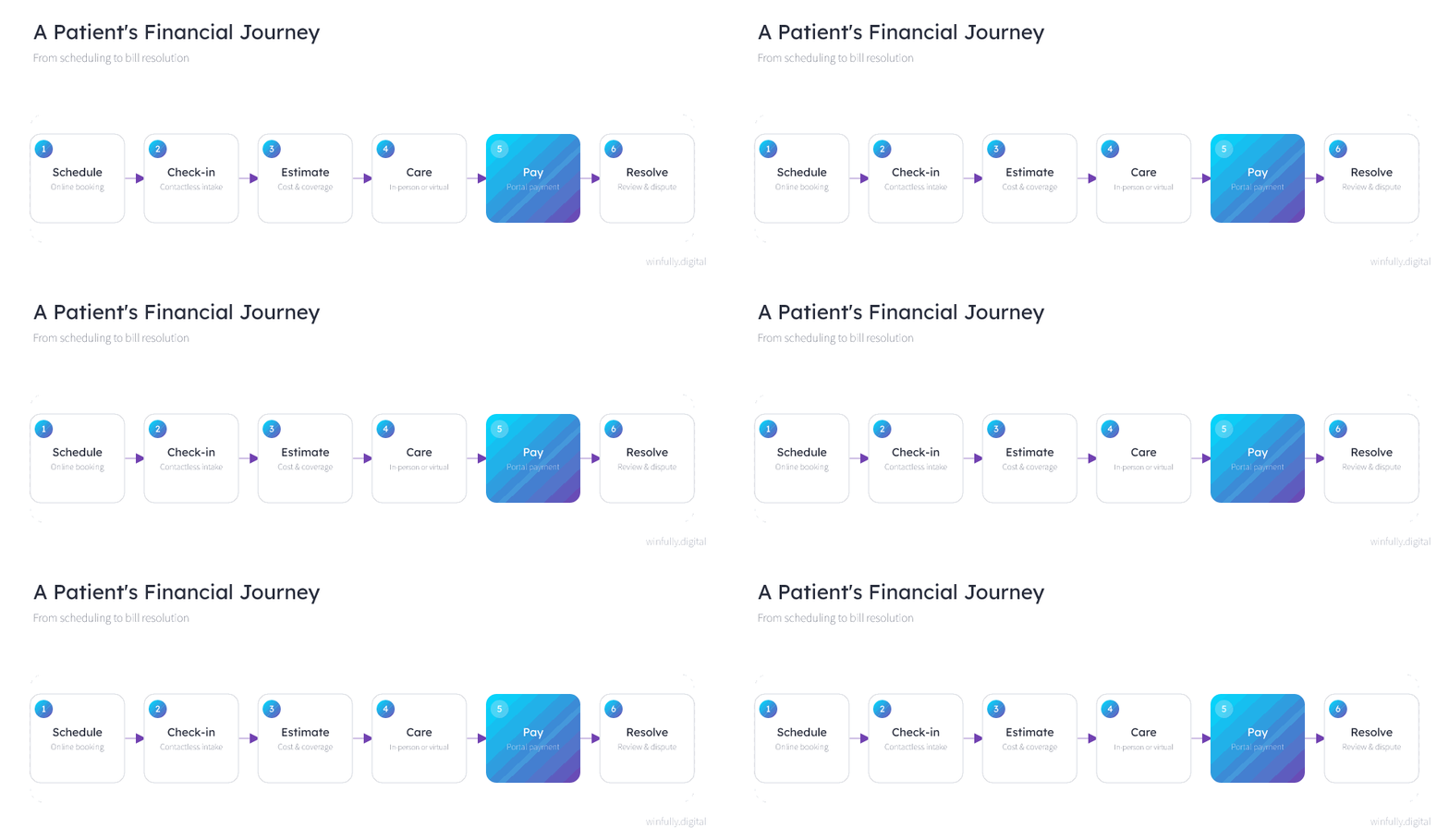
Taken together, these tools turn what is often a confusing experience into a clear, guided journey, as the animation below shows.
Final Words
Used together, these technologies help organizations sharpen their processes, raise the quality of care, and leave patients with an experience that doesn't end in frustration over a bill.