
Role of AI and ML in Life Science
How AI and machine learning accelerate life sciences, transforming drug discovery, personalized medicine, radiotherapy, and robotic surgery.
AI has been speeding up life sciences for years now, and the breakthroughs keep coming. A lot of that progress comes down to one thing: getting messy scientific data organized and actually usable, which is where AI has made real headway.
It starts with pulling human health data together and sorting clinical records so research can move faster. From there, smart technologies show up across the lab, in mass spectrometry and liquid chromatography among others, helping produce better diagnoses and more effective treatments.
AI and ML in life Science
Clarivate Analytics notes that researchers in drugs and medical devices are under more pressure than ever to access and analyze data quickly. The field keeps growing, and it needs a faster development cycle, which is exactly the gap AI can fill.
Here's where AI and ML are making a difference in life sciences:
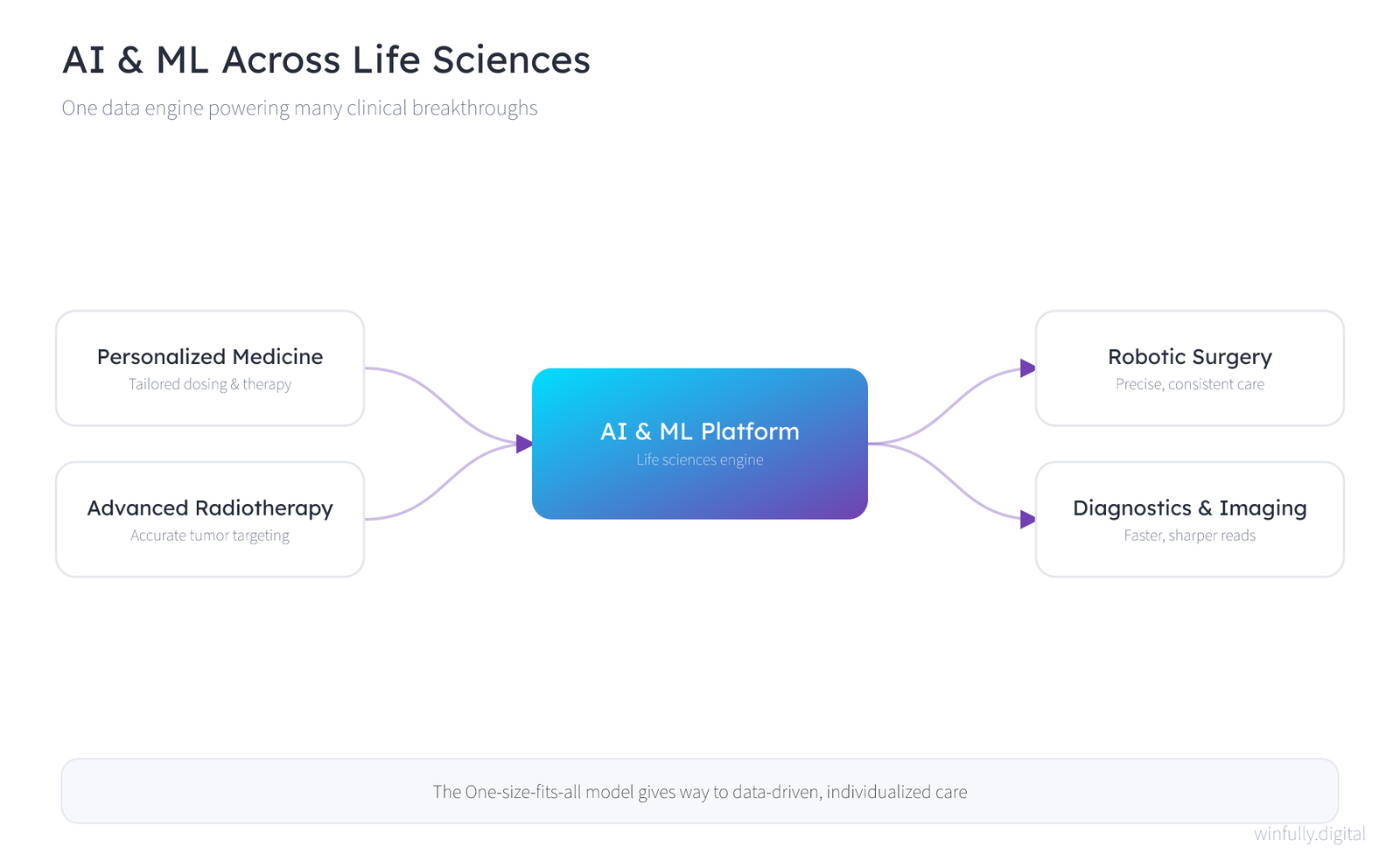
Personalized Medicine
Most prescribing today still follows standard dosing, and that one-size-fits-all habit has left plenty of patients on the wrong dose. Researchers are now using ML and predictive analytics to tailor treatment to each person's own health history.
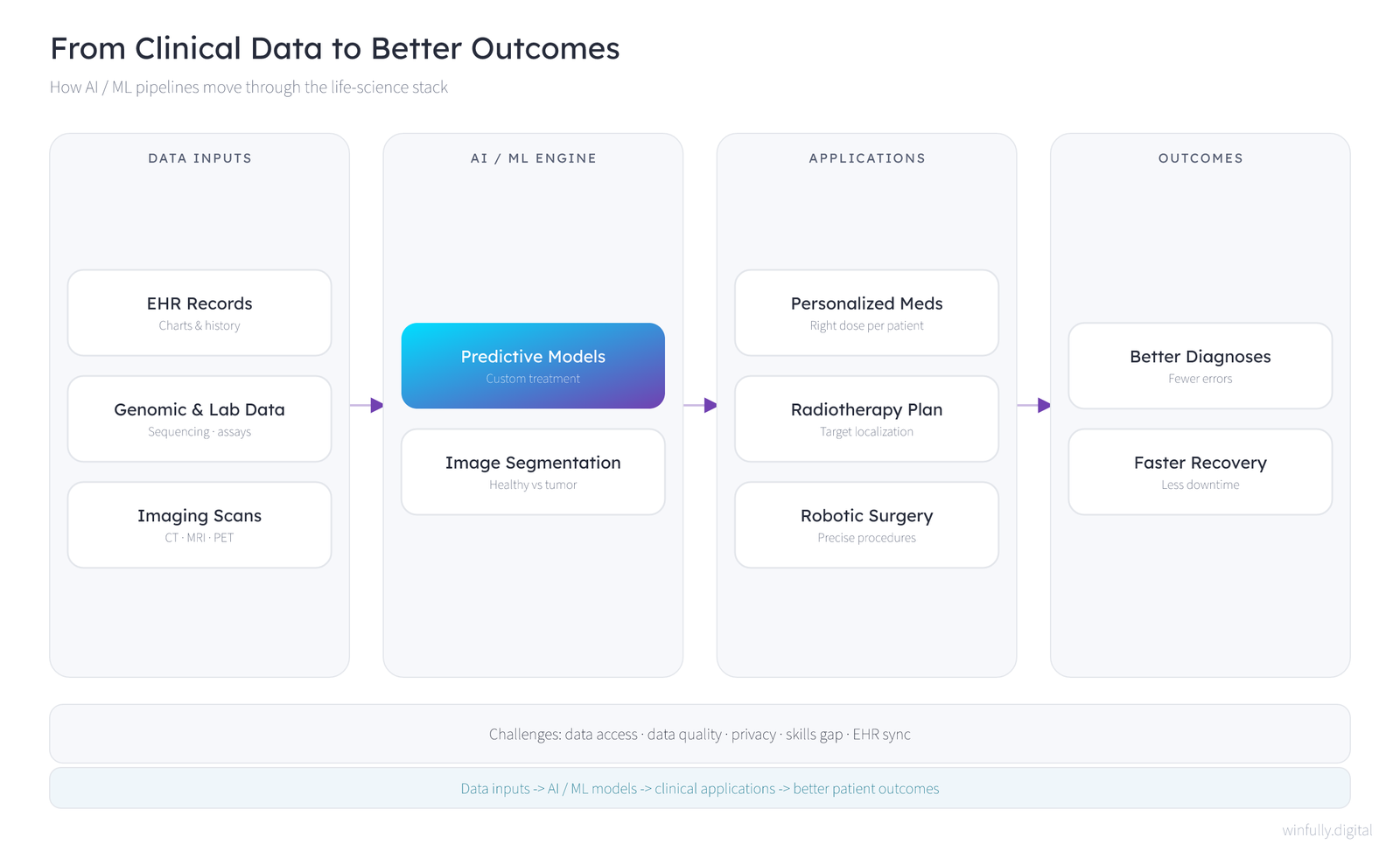
Digitize a patient's records into an AI platform and you can fine-tune both diagnosis and treatment. Add continuous monitoring, and doctors can adjust a dose, revise a recovery plan, or switch to a more effective medication as the data comes in.
Advanced Radiotherapy
Radiotherapy is central to cancer care, roughly 50% of all cancer patients go through it at some point, and AI has sharpened how precisely the treatment area can be targeted.
Since 2016, Google's DeepMind has worked with University College London Hospital (UCLH) on ML-based radiotherapy, aiming to improve the scans radiotherapists rely on. The algorithms help tell healthy tissue from cancerous tissue, so treatment spares as many healthy cells as possible.
That single distinction ripples through the whole workflow: medical imaging, patient simulation, treatment planning, the radiation itself, and quality assurance all benefit.
Robotic Surgery
Robotic surgery has gone from novelty to widely accepted in a short span. Surgeons can now reach delicate, hard-to-access areas that were off-limits before. Once trained, the system repeats operations with a consistency and precision that sidesteps human error.
You'll find it across specialties already: cardiothoracic, gastrointestinal, otolaryngology, gynecologic oncology, and urologic surgery. Backed by AI, it puts advanced, careful treatment within reach for more patients, with less downtime.
Robotic surgery treats patients with less risk of infection, less blood loss, fewer blood transfusions, less pain, shorter hospital stays, and faster recovery.
Challenges
AI is now woven into how healthcare and pharma organizations make decisions, cutting risk and getting more out of biomedical data. Its rollout, though, keeps running into a few stubborn obstacles:
- Untapped data: Only about 52% of life sciences data is actually accessible today. Much of the rest is too varied or unstructured to use, which holds AI back.
- Skills gap: A Pistoia Alliance survey put the industry's skills shortfall at 44%, another real drag on adoption.
- Data quality: Good analysis needs clean, consistent data going in. Poor data quality is one of the biggest blockers to using AI in drug design.
- Data privacy: AI can't reach its potential without clear privacy rules around it. That framework has to be in place from the moment an algorithm is conceived, protecting every stakeholder's data.
- Lack of sync: Health systems and the vendors building their electronic health record (EHR) systems still aren't well aligned, and that friction slows things down.
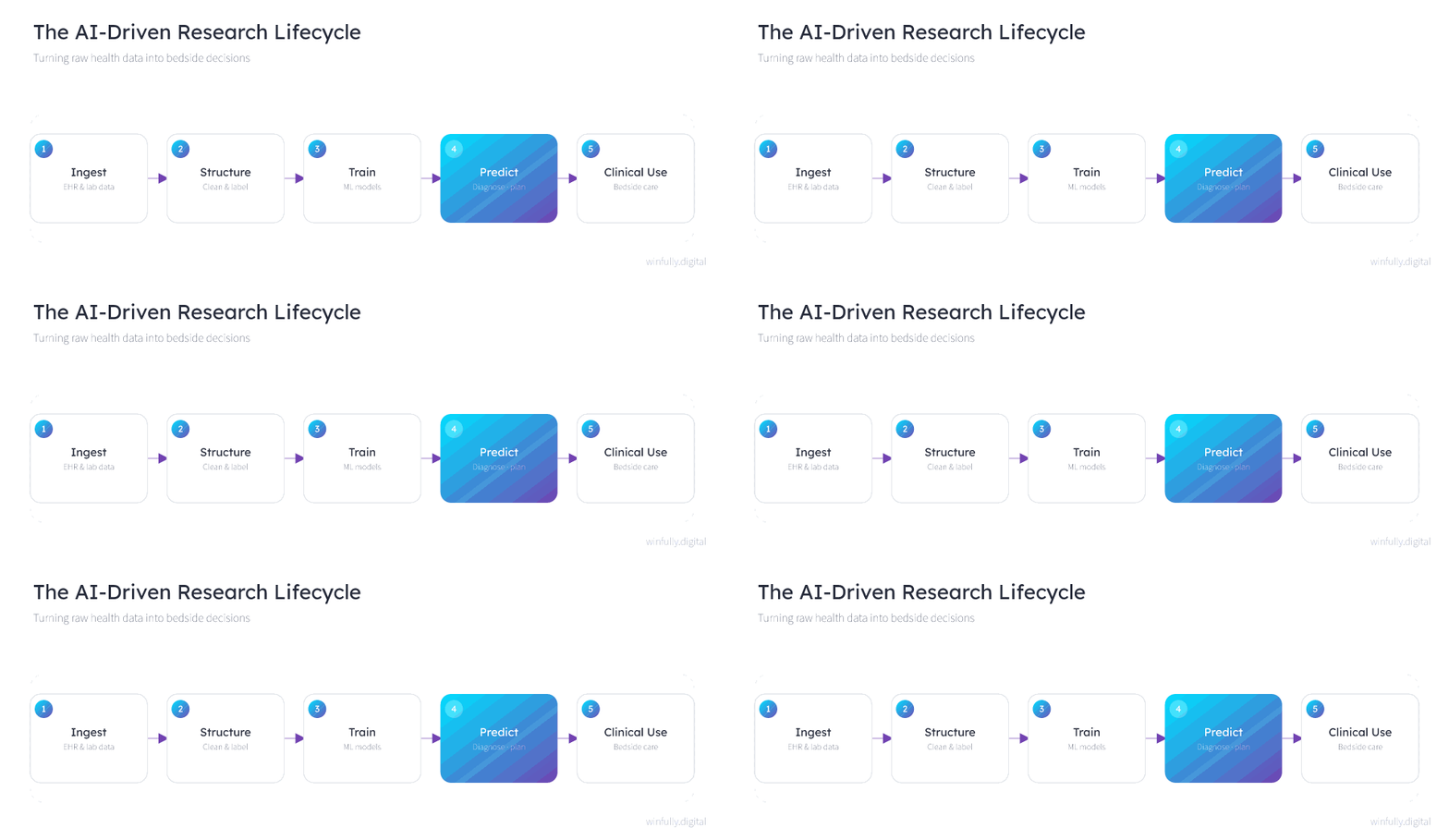
The diagram below traces the AI-driven research lifecycle from raw data to bedside decisions:
What's Next
The Pistoia Alliance's AI Center of Excellence reports strong appetite for AI across life sciences. The barriers above are what stand between that interest and wide adoption. Clearing them is the work of the next few years.
We help you to build your Product in Revenue Cycle Management, Telehealth, Data & Business Analytics, and Integrate Products and Services.