
Artificial Intelligence: Optimizing Workflows and Delivery
How AI transforms software development by automating tasks and improving documentation, communication, and code quality to speed project delivery.
AI has changed how we build software. It reshapes day-to-day coding, but the bigger payoff shows up further out: tighter workflows and faster delivery. This isn't hype. Teams that put AI to work in the right places ship with more accuracy and less friction.
This article walks through where that impact actually lands: documentation, team communication, and code quality analysis, and how those gains roll up into a more efficient project overall. We'll keep it grounded in what we've seen in practice rather than what the tooling promises.
Artificial Intelligence: Beyond Coding (Project Management & Resource Allocation)
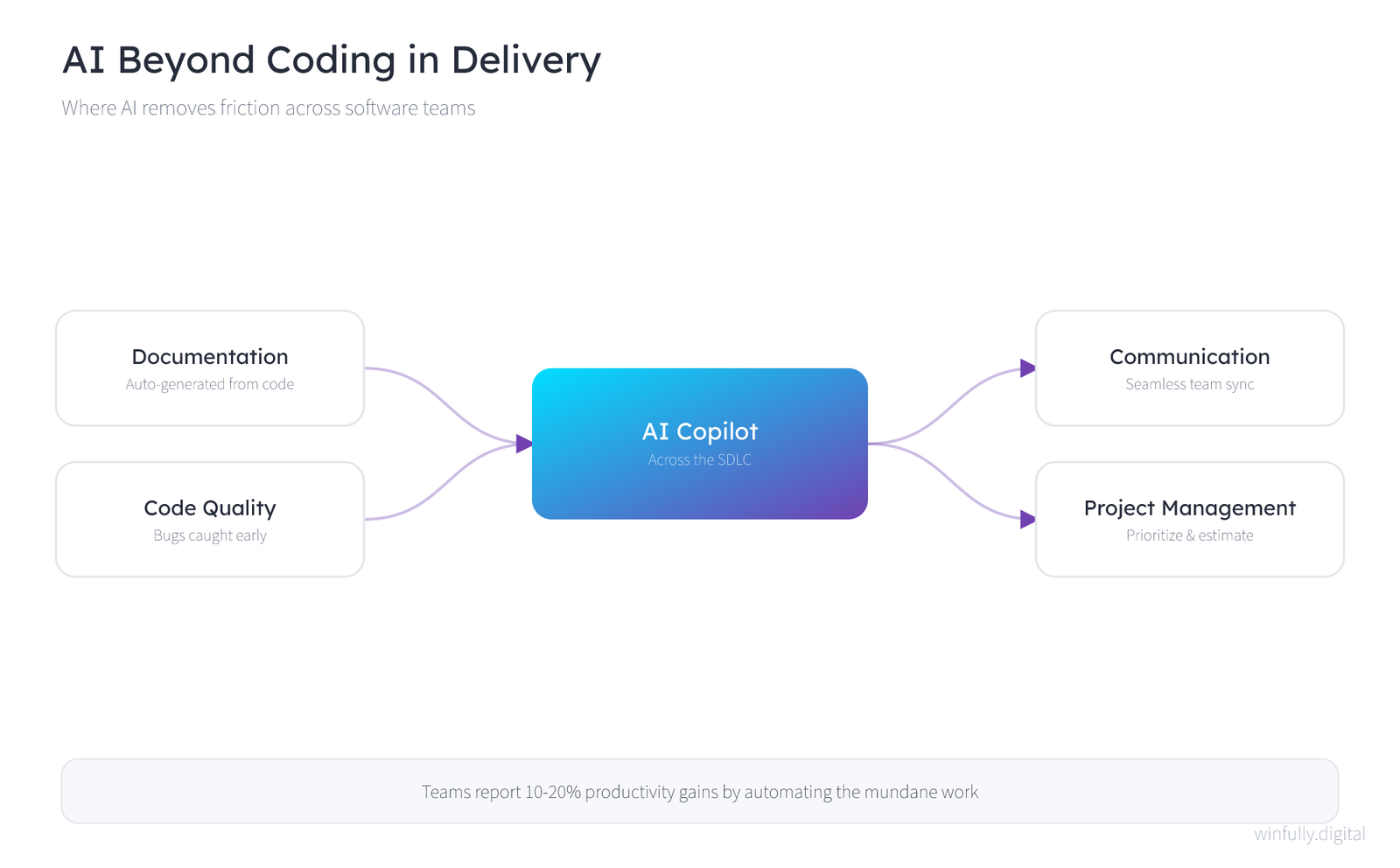
AI earns its keep well outside the editor. It's useful for project management, resource allocation, release planning, and delivery coordination. By reading historical data, user feedback, and market signals, it helps teams prioritize features, estimate timelines, and staff work more sensibly. The result is steadier throughput and, in most cases, happier customers. Used this way, AI gives decision-making more structure and keeps development work tied to what the business and the market actually need.
Embracing AI for Creativity and Efficiency
Pair AI with good coding tools and the routine work starts to disappear. Automate the repetitive tasks and your engineers get their time back for the hard parts: untangling tricky problems, designing well, making the calls that matter. Teams that understand where AI fits, and where it doesn't, tend to stay ahead. They keep pace with new tools and get more out of the people they already have.
Navigating Challenges with AI-Powered Solutions
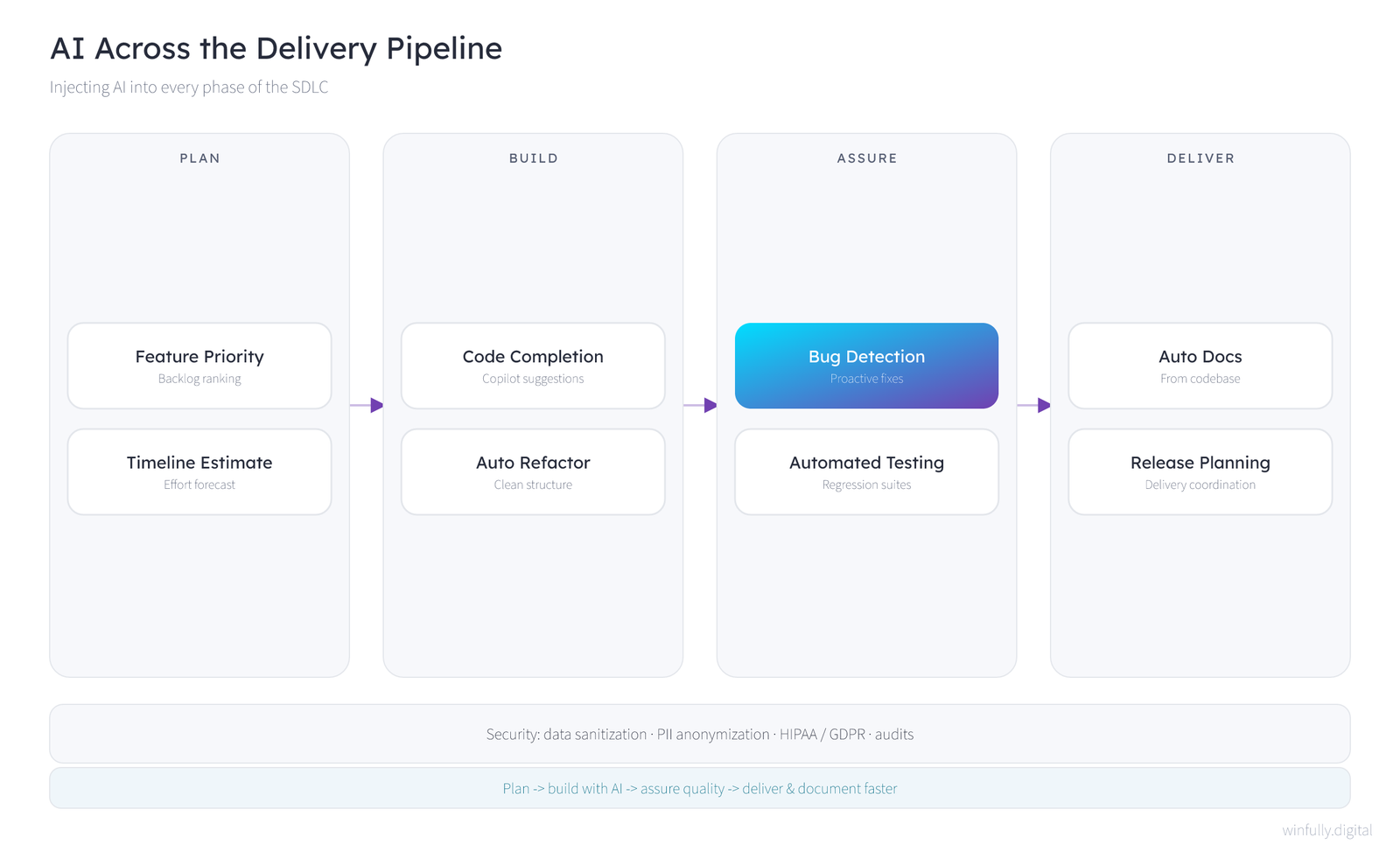
The clearest wins come from the grind work: documentation, communication, automated testing, refactoring, code quality analysis, and code completion. Hand those to AI and developers stop losing hours to busywork and spend that time on the problems that actually need a person.
Documentation and communication are where we've felt the difference most. Since we brought generative AI into our workflow, both have improved noticeably. The tools read the codebase and draft documentation on their own, and they smooth out the back-and-forth between team members. That adds up to real time saved.
We tried a range of AI coding tools before settling on what worked, and Copilot stood out. Its suggestions and code generation sped up our own teams, and they've paid off for clients too. ODSC, for one, has been able to spend more of its time on the creative side of its projects.
Safeguarding Data: A Commitment to Security
At WinFully Information System, patient health data comes first. We know how sensitive the information we handle is, and we treat it that way.
It starts with sanitization and anonymization. Before any data touches our AI systems, it goes through validation and quality checks, and we strip out personally identifiable information. That keeps the data private and keeps us on the right side of healthcare regulations.
Because so much of our work is in healthcare, we hold to standards like HIPAA, GDPR, and other patient privacy laws. Regular audits and security assessments back that up, both for us and for our clients.
The result is simple: clients can trust that their health data is protected, and that we take data integrity and patient confidentiality seriously.
AI-Powered Code Quality Analysis: Enhancing Code Base Quality
AI catches bugs early, so engineers can fix them before they spread. That keeps technical debt down and the codebase stable as it grows. After adding AI tools across Python, Node.js, and Ruby work, our engineers have seen productivity climb, debugging go faster, and code quality improve.
Boosting Software Quality, Efficiency, and Patient Care
In healthcare applications, code quality analysis tools flag problems automatically, so the software isn't just fast but reliable and safe for patients. The same tools help enforce coding standards and compliance guidelines, which keeps delivery consistent.
Our internal reviews back this up. Engineers report clear performance gains from AI tools, especially on healthcare-specific technology. Development cycles have gotten shorter, patient data management has improved, and the overall quality of what we deliver has gone up.
Most organizations see AI tools improve performance by 10-20%. That shows up in several places: faster code, better documentation and communication, and quicker decisions, largely because research takes far less time to run or read. Even our administrative staff have noticed the difference in recruiting.
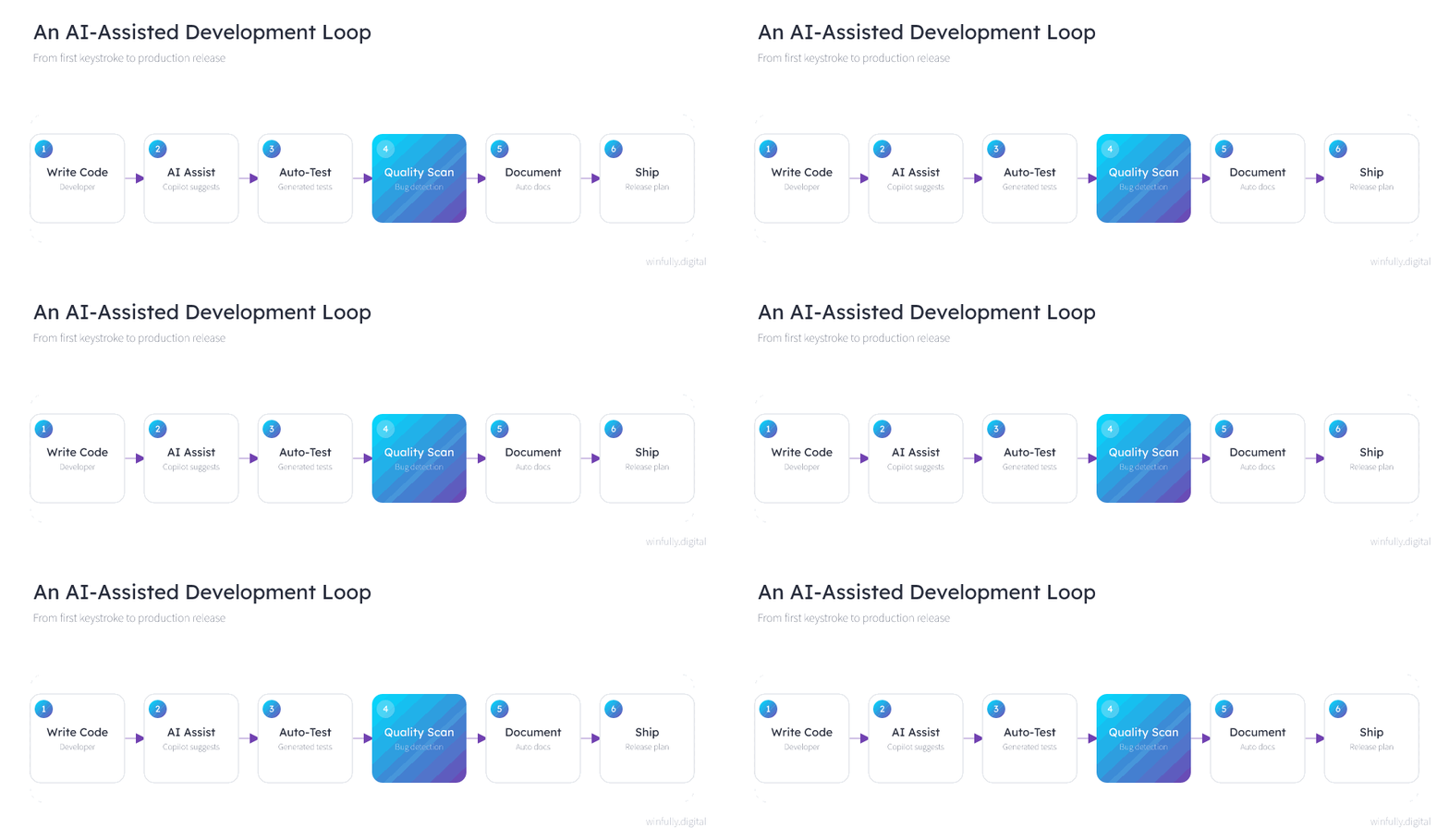
The diagram below traces the AI-assisted development loop from first keystroke to production release:
Improve Healthcare Delivery and Operations with AI
Bringing AI into WinFully has paid off. Our numbers point to at least a 10% jump in team performance since we adopted it. That comes from faster code development, better patient data management, clearer communication, and quicker decisions, all of which feed into better healthcare outcomes.
Embracing AI for Future-Ready Healthcare Solutions
Wondering what AI could do for your healthcare IT? Reach out and let's talk it through. At WinFully, AI is central to how we build, and we keep testing new tools so our healthcare IT work stays sharp.
Our team pairs engineers, healthcare IT specialists, and project managers who know this space well. Whether you want to build new AI-driven healthcare applications, get more out of the systems you already run, or improve patient care with AI, we've done the work before and can help you do it too.
Connect with Us for Customized AI Healthcare Solutions
Ready to innovate with AI in healthcare.