
Improve Revenue – How Telehealth Can Help
How telehealth helps providers grow revenue, boost efficiency, attract and retain patients, and reduce no-shows while matching in-person visit pay.
Telehealth has changed how patients expect to see their doctor. Many now reach for a video visit before they'll book an in-person one, and that demand has pushed healthcare organizations to offer virtual care through audio/video tools and dedicated telehealth platforms.
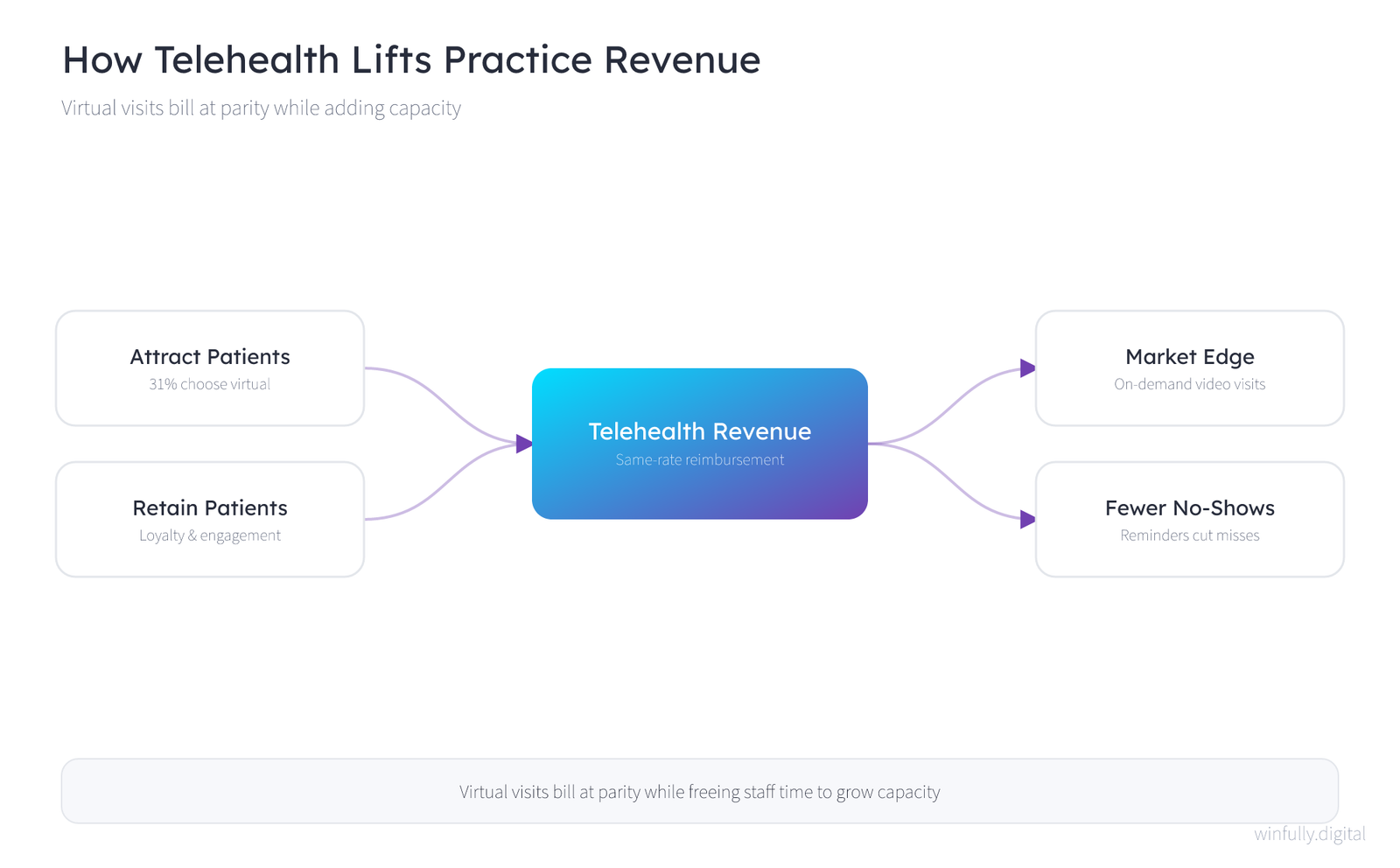
Providers often worry that a shift to virtual visits means a hit to revenue. It usually doesn't. Telehealth visits are typically reimbursed at the same rate as in-person visits, sometimes more. And because a video visit tends to take less time than an in-person one, you free up capacity to put your resources to better use, which lifts revenue on its own.
Here's a closer look at how telehealth helps your bottom line.
Attract New Patients
Research from the JAMA network, under the American Medical Association, counts more than 160 million urgent care and emergency room visits each year in the U.S. Of those, 31% of Americans turn to telehealth providers because it's faster and more convenient than a traditional visit. The takeaway is simple: patients increasingly want care that's timely and easy to reach.
That's especially true for urgent care, where people need to be seen quickly. Adding tele-visits, telemedicine, and online prescriptions is a straightforward way to meet patients who prefer a digital option, whether that's because of age, physical limitations, or plain convenience.
Marketing Edge Over Competitors
Telehealth is a real equalizer in a competitive market. If a nearby practice doesn't offer virtual visits, adding them gives you a clear edge, and on-demand video is a strong selling point for any practice that wants to look patient-centered.
Most providers can't take on unlimited urgent care with the staff they have. Telehealth changes that math: you can open up same-day slots that fit around an already full schedule, which opens the door to patients you'd otherwise turn away.
Retain Existing-Patients
The cheapest revenue to earn is the revenue you keep. Healthcare has only gotten more competitive over the past few decades, and offering telehealth is one way to deliver more inclusive care and keep patients engaged with your practice.
Think about what drives patients away: long wait times, appointments that get canceled, trouble getting to the office, travel costs. Telehealth removes a lot of those hurdles for people who want to stay with your practice but struggle with the logistics. That translates into a safer, more comfortable experience and higher satisfaction.
Virtual visits win back the long-term patients who'd grown frustrated with what traditional care could offer them. Keep engaging your existing patients this way, and you hold onto their loyalty while staying competitive.
Reduce No-Shows
No-shows and late cancellations are a constant drain. They leave staff idle and slots empty, and while it may not feel like a big deal in the moment, it adds up to real lost revenue. Patients miss or arrive late for the usual reasons: traffic, a personal emergency, no ride, or simply forgetting.
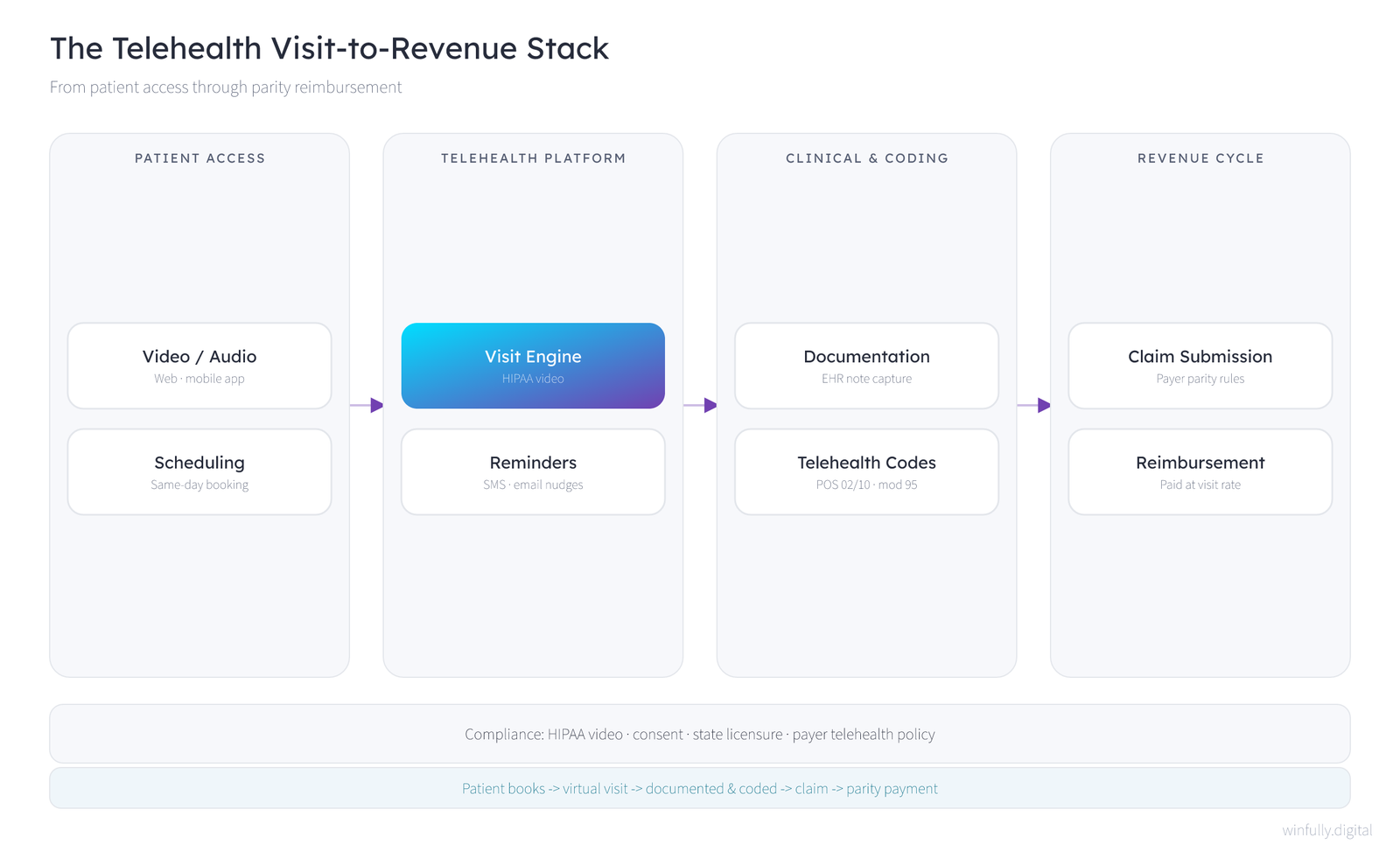
Telehealth cuts into that. Patients can join from wherever they are, and automated reminders make missed appointments far less likely. You won't get to zero no-shows, but tele-visits remove a lot of the reasons behind them.
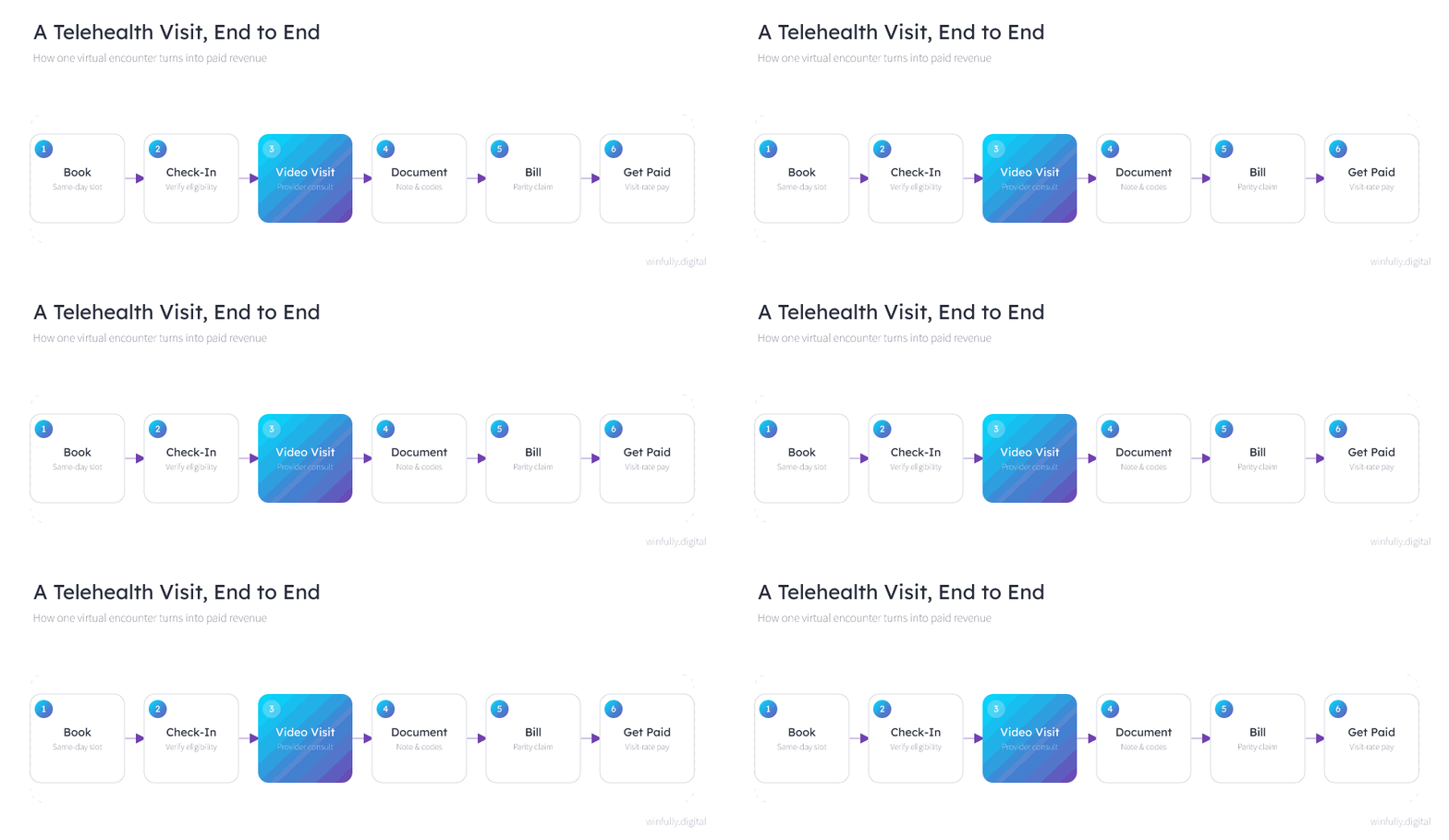
The animated flow below follows a single virtual encounter end to end, showing how each step converts into paid revenue.
Takeaway
Once providers see that telehealth can be more efficient than the traditional model, most don't look back. It's more than a convenience; it's revenue that's been sitting on the table. Telehealth brings new patients in the door and adds lasting value to the practice.
If you want to build a telehealth solution from scratch, improve the platform you already have, or figure out the right integration points, reach out to our team.