
Benefits of RPA (Robotic Process Automation) in the Healthcare?
How Robotic Process Automation streamlines healthcare tasks like patient onboarding, medical billing, and claims management to cut costs and errors.
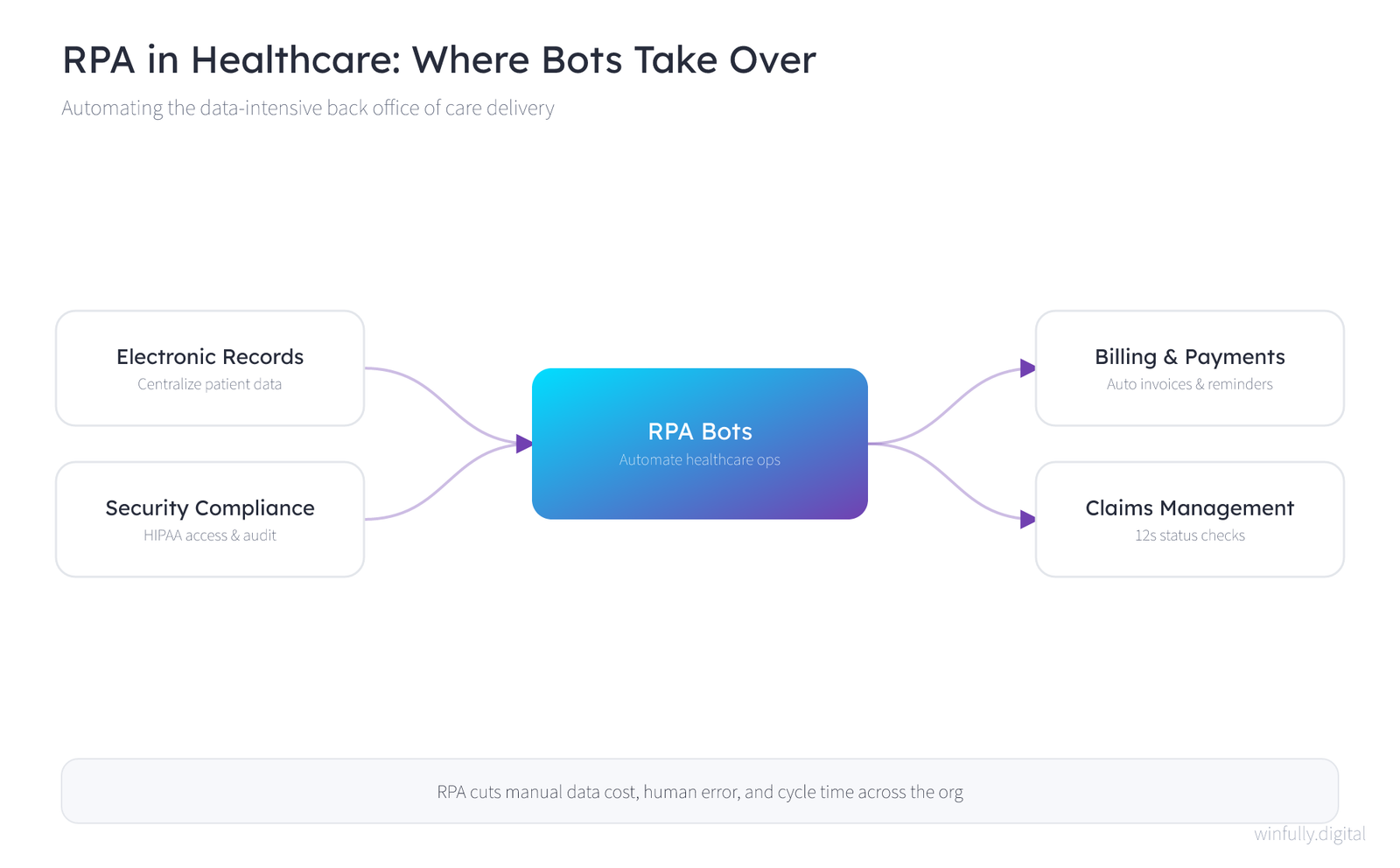
Healthcare runs on data, and a lot of it still moves by hand. Patient onboarding, follow-up appointments, storing reports and prescriptions, medical billing, claims management: these are all data-heavy jobs where a small error carries real consequences. This is where Robotic Process Automation (RPA) earns its keep. It speeds up routine processes, gives patients a smoother experience, frees staff for higher-value work, and trims cost.
Automation also makes the underlying data more trustworthy, which matters as much as speed in a clinical setting. The rest of this article walks through where RPA saves time, money, and resources in a healthcare organization.
Electronic Records
Understanding the Benefits of RPA in Healthcare
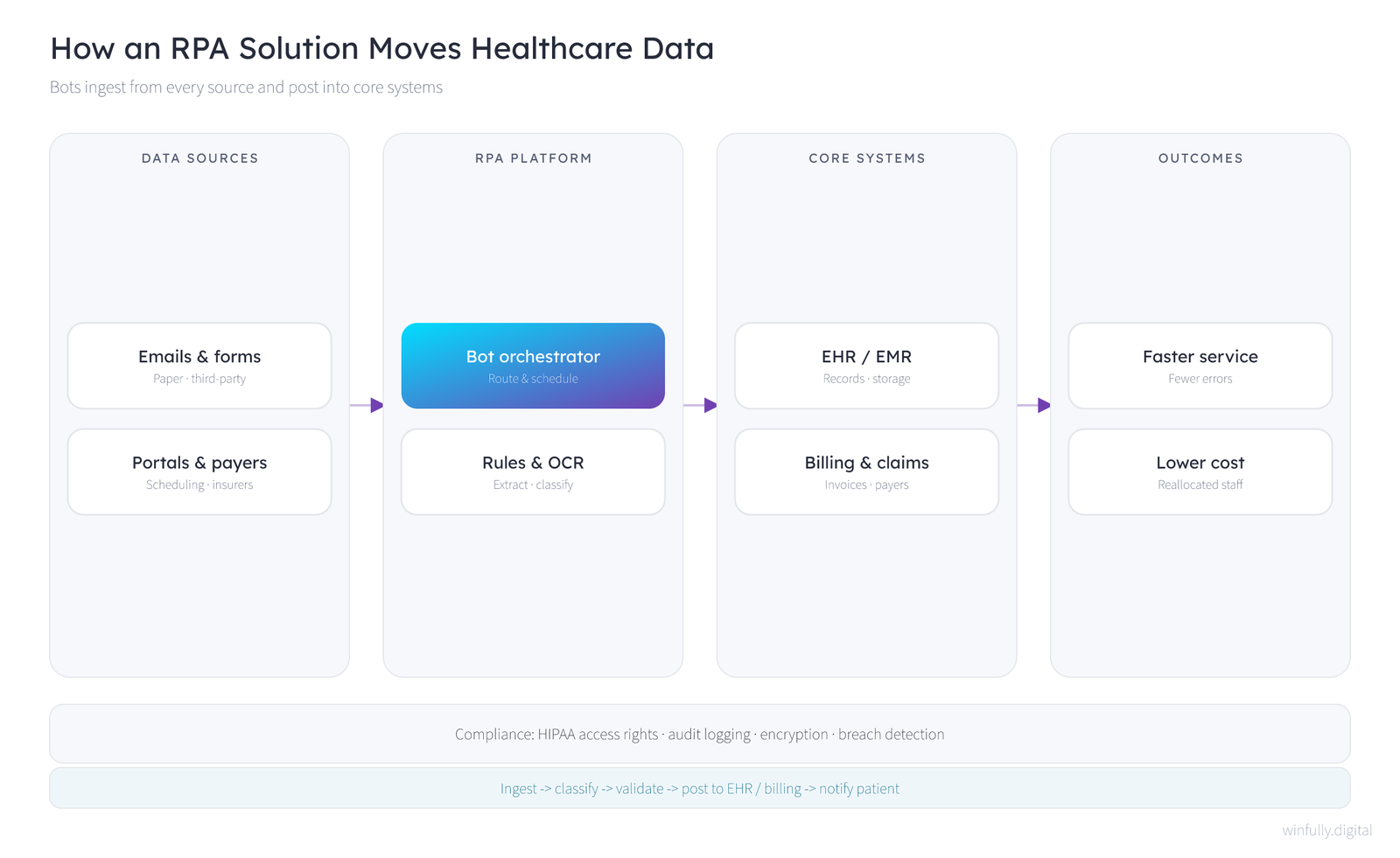
According to a whitepaper by LexisNexis, "the healthcare industry spends around $2.1 billion on manual data management due to poor execution and being prone to manual errors." Patient data arrives from all directions, including emails, paper forms, scheduling systems, third-party portals, and insurance companies. Because none of it is centralized, someone has to key it in and reconcile it, over and over.
RPA pulls those scattered sources into a single flow and hands the coordination to one admin role instead of many. Bots process patient records and sort them by admission or recharge date, condition, age, or gender. The result is cleaner electronic records with far less back-office effort behind them.
Security Compliance
HIPAA sets the rules healthcare systems have to live by, and those rules are strict for good reason: patient records and every transmission of them demand tight controls. In practice, staying compliant comes down to precise processes, accurate data, and dependable security systems.
RPA supports all three. When bots share data electronically, they do it inside HIPAA's guardrails, and you can make permission and access checks a mandatory step rather than something a busy employee might skip. Bots also flag suspicious activity faster and respond sooner, which lowers the odds of a breach, data corruption, or loss.
Billing and Payment System
Billing and payments are about as repetitive as administrative work gets. Bots can take over the whole cycle, accounting for appointments, follow-ups, surgeries, medicines, and everything else that lands on an invoice. Invoices generate automatically and accurately, which saves the billing team hours, and patients get automated payment reminders so fewer bills slip past their due date.
The same approach smooths out payments going the other way, to doctors, pharmacies, labs, and outside service providers. You can program the system to group and consolidate each function and produce clean bills, with no one manually tallying tests, food items, medicines, workdays, and benefits.
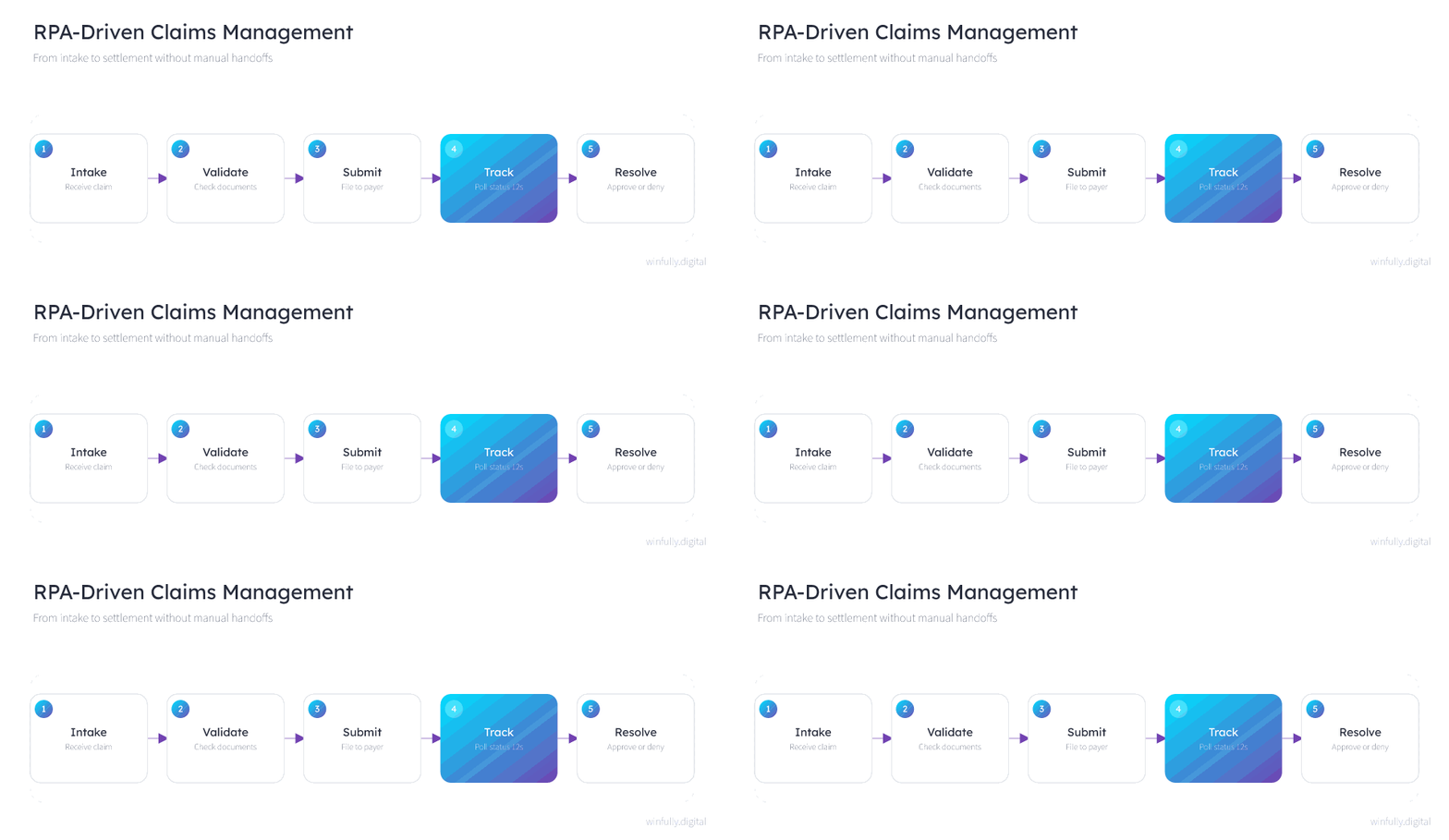
The end-to-end claims process is where RPA's speed advantage is most visible, moving a claim from intake to settlement without manual handoffs.
Claim management
Most claim denials trace back to manual admin slips: a missing document, a registration mismatch, an eligibility gap. Checking the status of a single insurance claim takes a human staff member more than a minute. By comparison, "an RPA takes only 12 seconds to respond, which is nine times faster with greater accuracy than the manual process."
Bots and AI handle the claims workflow end to end, communicating denials quickly, fast-tracking resubmissions, and calculating claim amounts more accurately from history. Along the way they catch missing documents and incomplete patient information and close the communication gaps that usually drag settlements out. For a healthcare organization, that means faster claims, fewer financial losses, and less mismanagement.
Summing up
RPA is catching on across healthcare, and the reasons go well beyond the ones covered here. Paired with fast-moving technologies like artificial intelligence and software bots, it gives the industry room to move quicker. Adoption climbs every year, and it's expected to rise further over the next three.
Put simply, RPA is good at exposing where healthcare processes leak time and accuracy. It closes the gaps left by inconsistencies, manual errors, and process limits, and it keeps doing so day after day, which is what makes it stick.