
The Impact and Importance of Personas in Healthcare Application Development
How user personas reshape the way healthcare apps are conceived, designed, and built, making them more secure, HIPAA-compliant, and user-centric.
Introduction
Healthcare software is one of the busiest corners of digital health right now, and a lot of what separates a good app from a frustrating one comes down to how well the team understood who they were building for. That's where personas come in: fictional but data-driven stand-ins for real user groups. Used well, they shape how a healthcare app is conceived, designed, and built, and they push teams toward products that are more secure, more compliant, and genuinely easier to use. Here's how they do it.
What Are Personas in Healthcare Technology?
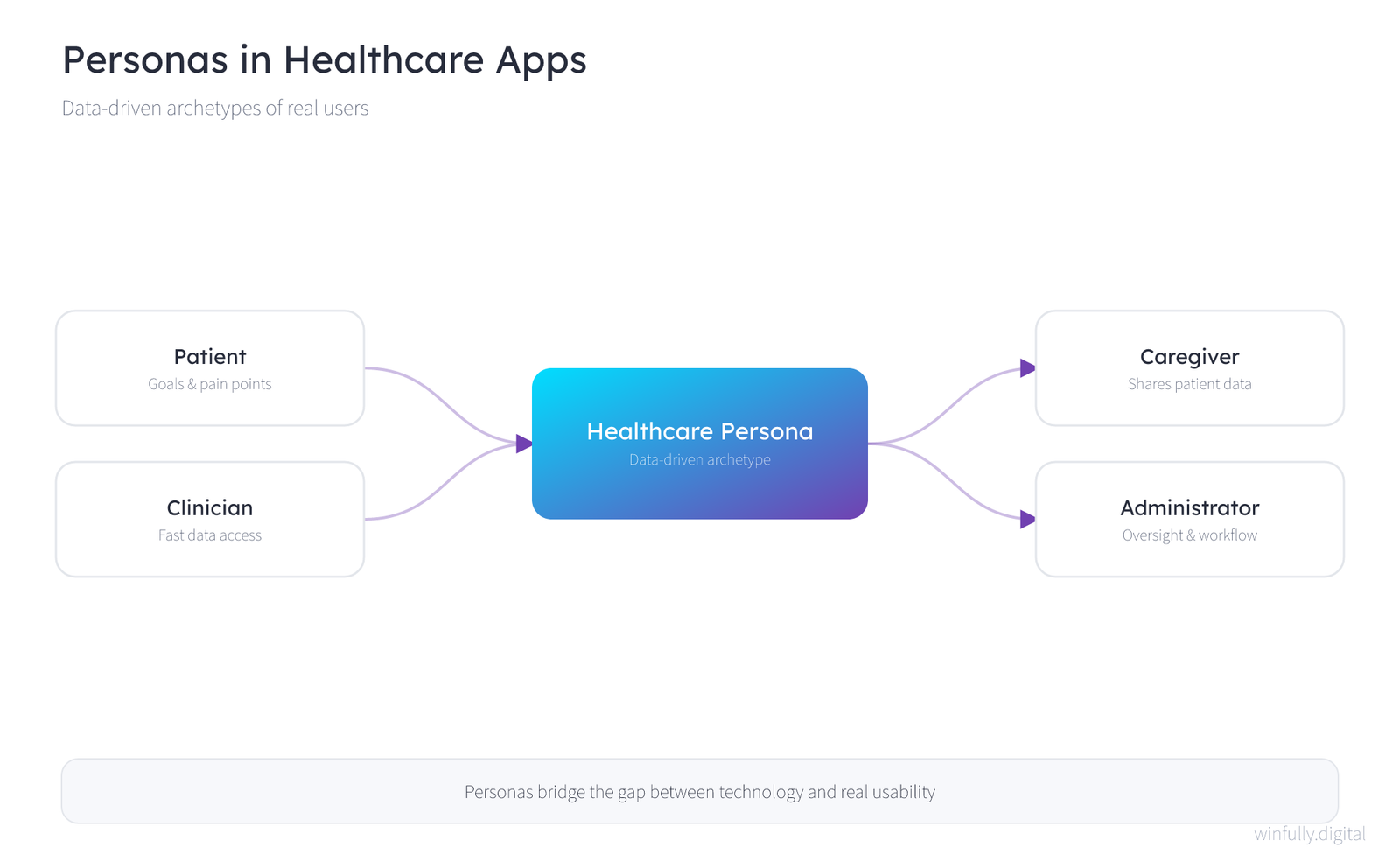
Personas are more than a user profile. They're detailed, data-informed archetypes that stand for a specific group of users. In healthcare, that might be a nurse working back-to-back shifts, a tech-savvy millennial patient, or an older adult managing a chronic condition. Each one keeps development grounded in a real person, so the product ends up intuitive and aimed at problems people actually have.
By capturing how users behave, what they need, and what they expect, personas connect the technology to the way people will actually use it. That's the difference between an app that merely works and one that people find worth using.
How to Develop Effective Personas for Healthcare Applications
Understanding User Needs
Personas help developers see the product through the user's eyes, which keeps features tied to what people actually need. A couple of examples:
- A caregiver persona might surface the need to share patient data easily between family members and medical providers.
- A clinician persona might stress fast access to critical patient data in an emergency.
Enhancing Usability
Personas shape interface design by reflecting how people really interact with the app. Older users who aren't comfortable with technology, for instance, may need larger fonts, simpler navigation, and voice commands.
Prioritizing Features
By understanding the unique challenges faced by different users, developers can prioritize app features. For instance, a patient managing multiple medications might benefit from a built-in medication tracker with automated reminders.
WinFully on Technologies: Persona-Driven Excellence
At WinFully on Technologies, we build healthcare applications around personas from the start. Grounding the work in real user insight lets us serve the different needs of patients, providers, and administrators in the same product, and keeps the result secure, compliant, and easy to use.
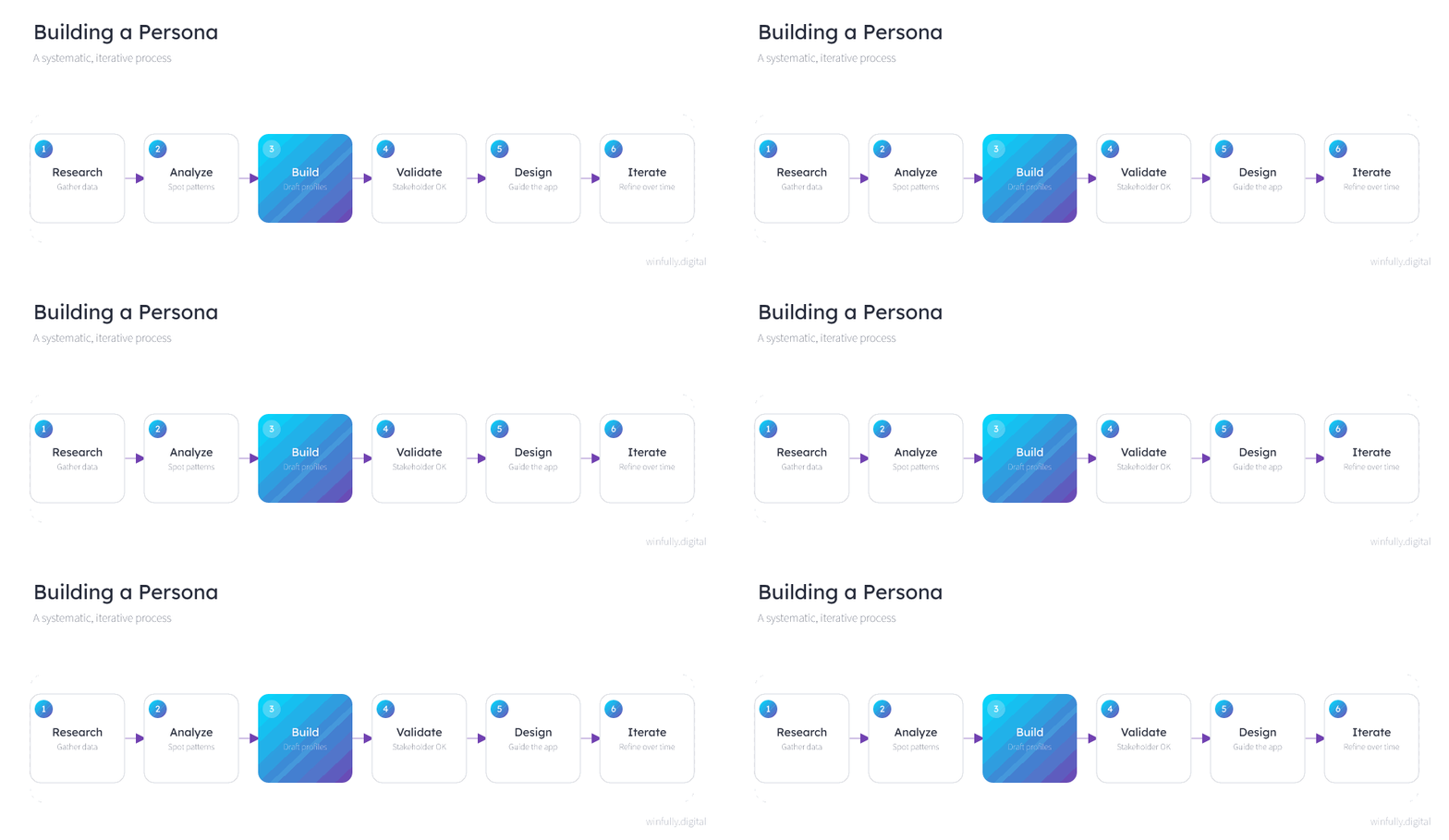
The animation below walks through that systematic process, from initial research to the iteration that keeps personas current.
Crafting Effective Personas for Healthcare Apps
Creating accurate and impactful personas involves a systematic approach:
-
Conduct Comprehensive User Research
Collect qualitative and quantitative data through surveys, interviews, and focus groups. Include insights from patients, clinicians, and administrators to capture a holistic view. -
Analyze Data for Patterns
Identify common behaviors, challenges, and expectations that define different user groups. -
Develop Detailed Persona Profiles
Create profiles that include:- Demographics (age, gender, profession)
- Goals and challenges
- Preferred technologies and communication methods
- Specific pain points and needs
-
Validate with Stakeholders
Share personas with healthcare professionals and other stakeholders for feedback and refinement. -
Iterate and Evolve
Continuously refine personas based on user feedback and changing healthcare landscapes.
Personas and Compliance: Addressing Security Challenges
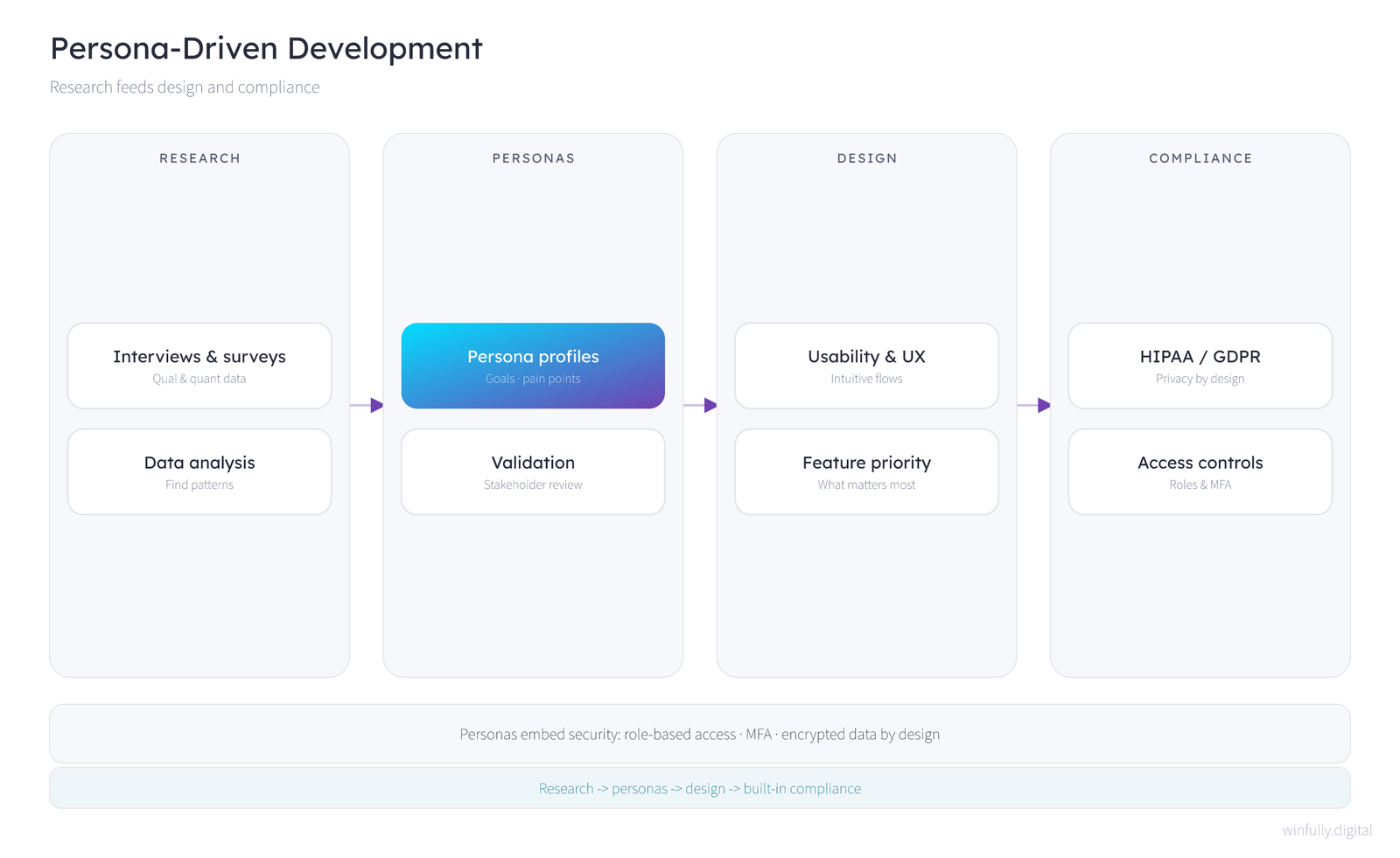
In healthcare, compliance with regulations like HIPAA and GDPR isn't optional. Personas help developers spot security weak points early, because they force you to think about how each type of user handles sensitive data.
Examples:
- A clinician persona needing quick patient data access might require role-based access controls and multi-factor authentication.
- A patient persona managing a chronic condition might call for secure integration with IoT devices like glucose monitors, with encrypted data transmission throughout.
Build compliance thinking into the persona work itself, and you end up with applications that are secure without making them a chore to use.
Case Studies: Use of Personas in Successful Healthcare Applications
One of our projects at WinFully on Technologies shows what persona-driven work can do. We built a telemedicine app around personas tailored to:
- Elderly patients who needed simple, accessible interfaces.
- Patients with chronic conditions who needed tight integration with wearable devices.
- Tech-savvy millennials who wanted advanced features like AI-powered health analytics.
The result was an app with:
- High user satisfaction rates
- Improved patient engagement
- Clean interoperability with other healthcare systems
The payoff of designing around real personas showed up in every one of those numbers.
Challenges in Persona Implementation and Solutions
Personas pay off, but getting them right comes with a few challenges:
Inaccurate Research
Weak research produces flawed personas. The fix is to invest in careful data collection and analysis up front.
Balancing Diverse Needs
Serving several personas can pit their needs against each other when it's time to prioritize features. Agile development helps here, letting you balance competing requirements over successive iterations.
Evolving User Behaviors
Personas go stale as users change. Set up a routine for ongoing research so you can keep them current.
The Future of Persona-Driven Healthcare Apps
As the technology matures, personas will matter even more, especially in a few areas:
- AI-Powered Personalization: shaping the app experience around real-time user data and preferences.
- IoT Integration: designing interfaces that work smoothly with wearables and remote monitoring devices.
- Behavioral Analytics: using AI to sharpen personas based on how people actually use the product.
We keep refining our persona-driven approach at WinFully on Technologies so the applications we build stay a step ahead of what users expect.
Conclusion
Personas are more than a development tool. They're a blueprint for healthcare applications that improve outcomes, feel better to use, and hold up to compliance requirements. Build them into your process and you get solutions that don't just function but genuinely move the needle.
At WinFully on Technologies, personas are central to how we deliver healthcare software. A persona-driven approach is how we help organizations ship secure, user-centered applications that push digital health forward.