
Enhancing Patient Engagement Through Digital Health Solutions
How digital health solutions boost patient engagement using AI/ML, intuitive interfaces, and clinical workflows that keep patients motivated in care.
Patients now expect their care to work the way the rest of their digital life does: convenient, personal, and available when they need it. That expectation runs through the whole journey, from booking an appointment and remote monitoring to follow-up visits and shared health records. For primary care and specialty clinics, digital health tools are the practical way to meet it and keep patients involved in their own care.
Getting there is harder than buying software. Real engagement comes from a mix of AI/ML, interfaces people actually want to use, data interoperability, and clinical workflows that hold together. And underneath all of it sits a simple commitment: put the patient first, and build around communication, trust, and shared decisions.
The rest of this piece covers the tools and tactics that make that happen, and how they translate into better satisfaction, loyalty, and outcomes in primary and specialty care.
The Growing Importance of Patient Engagement
Meeting Evolving Patient Expectations
People bank, shop, and stay in touch online without a second thought, and they carry that expectation into healthcare. Research backs up why it matters: patients who are actively engaged in their care tend to stick with treatment plans, keep up with regular check-ups, and report higher satisfaction.
Boosting Clinical Outcomes
Give patients easy access to their test results, a real-time line to their care team, and information written for them, and they're more likely to stay on their medications and keep up with preventive care. That follow-through shows up downstream as better health outcomes, fewer hospital readmissions, and lower costs across the board.
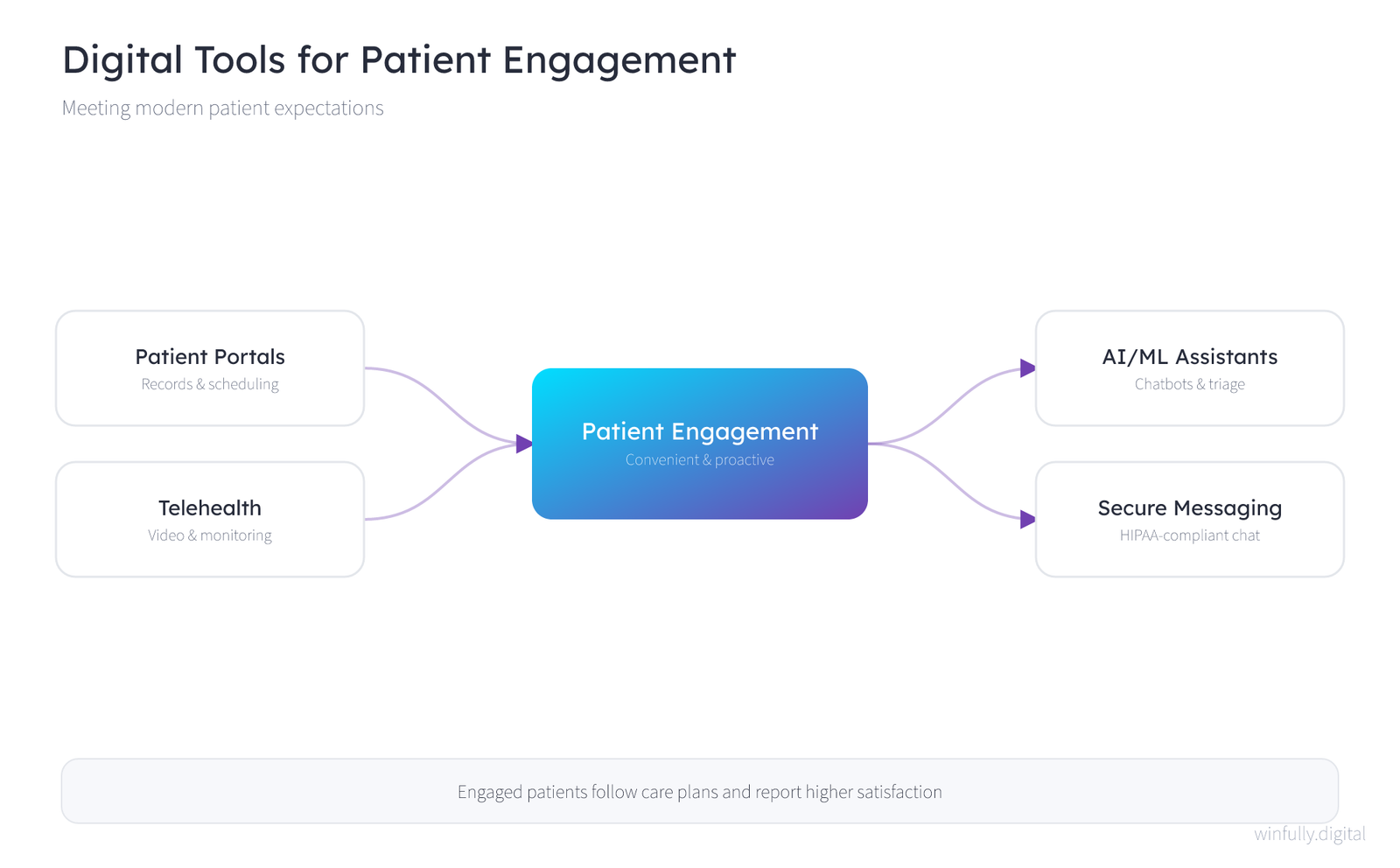
Core Digital Health Solutions for Patient Engagement
Patient Portals and Mobile Apps
- Patient Portals: A secure place to view records, book appointments, and message providers. Because the same data is visible to patient and clinician alike, this shared record model cuts down on confusion and builds trust.
- Mobile Apps: Apps built for primary and specialty care let patients log symptoms, get medication reminders, and message their clinicians. Well-timed push notifications nudge them toward the next step in their care.
Why It Matters When patients can see their own medical information, they make more informed decisions and lean on their clinicians as partners rather than gatekeepers.
Telehealth and Virtual Consultations
- Video Visits: A virtual consult means a patient can see their provider from home, which is a real difference-maker for anyone with limited mobility or a packed schedule.
- Remote Patient Monitoring: Wearables and at-home diagnostic tools let clinicians follow vitals in real time. That continuous stream matters most in specialty care like cardiology or endocrinology, where a single snapshot isn't enough.
AI/ML-driven chatbots and Virtual Assistants
- Symptom Checkers: AI/ML models can work through clinical guidelines to give a preliminary read. The patient gets an answer right away, and the clinic fields fewer non-urgent calls.
- Appointment Scheduling: Chatbots take care of the routine, booking, reminders, cancellations, while quietly collecting structured data along the way.
- LLM-Powered Support: Large Language Models (LLMs) can draft educational material tailored to a patient or answer the questions that come up again and again, which leaves clinical staff free for the cases that actually need them.
Secure Messaging and HIPAA-Compliant Communication
Secure messaging replaces phone tag and the unencrypted email nobody should be sending. Give providers and patients one channel for quick updates, test results, and follow-up instructions, and a lot of administrative back-and-forth simply disappears. With interoperability in place, those messages fold into the patient's shared record, so nothing important gets lost in an inbox.
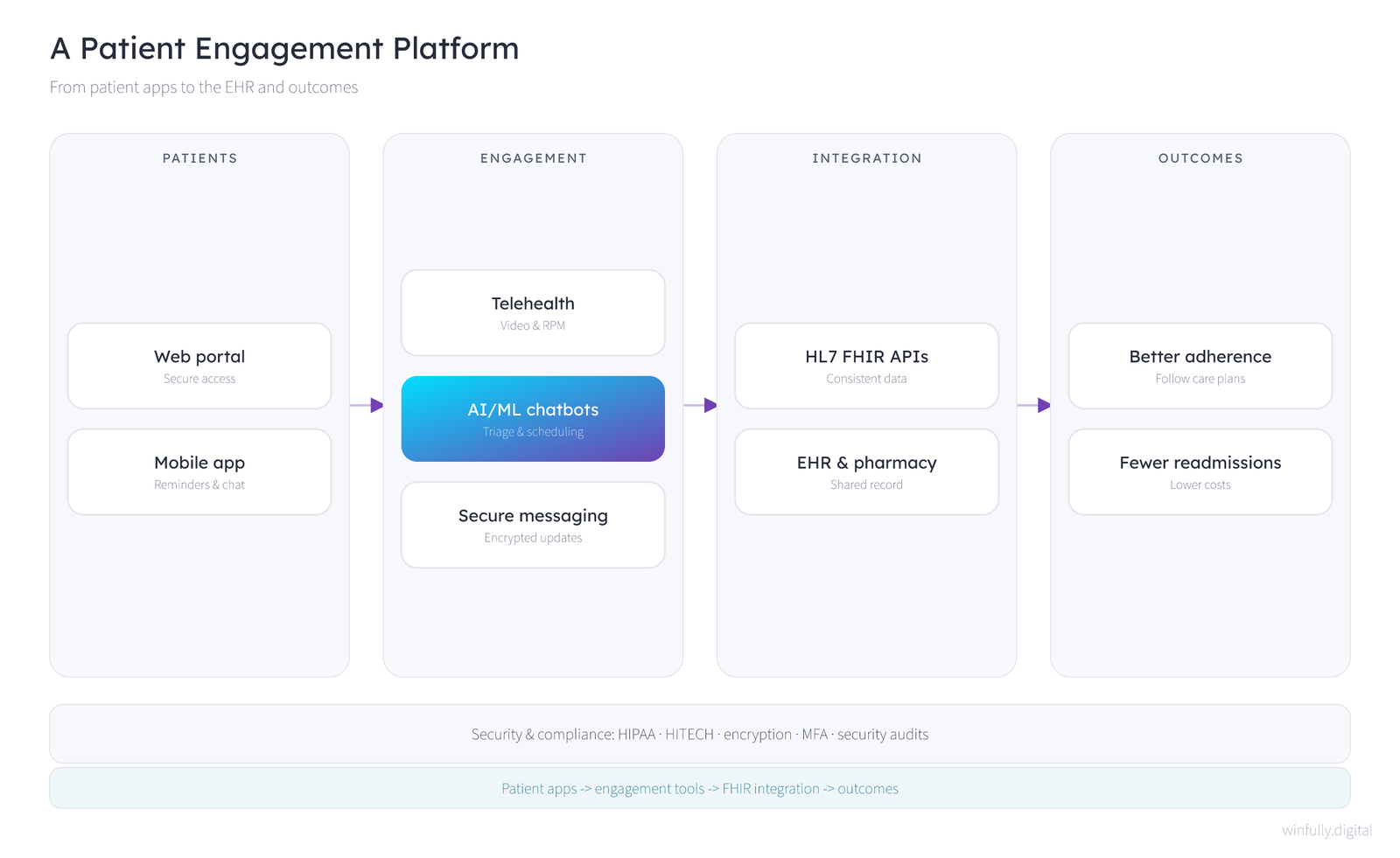
Overcoming Implementation Challenges
Data Interoperability
An engagement platform is only as good as the data it can reach. It has to share cleanly with EHR systems, pharmacy records, and the other clinical tools already in use. Standards like HL7 FHIR keep that data consistent from one care setting to the next, which is what prevents duplicate tests, conflicting diagnoses, and the administrative mess that follows.
Training and Adoption
The best tool in the world fails if the staff won't use it. Good training, role-based onboarding, and support that doesn't end at go-live give clinicians, nurses, and admin teams the confidence to lean on the new system. Keep a feedback loop open, too, so the pain points surface early and get fixed.
Regulatory Compliance and Security
Patient data protection can't be an afterthought. Any engagement rollout has to satisfy HIPAA, HITECH, and whatever regional rules apply, and that has to be settled up front. Data encryption, multi-factor authentication, and regular security audits are the baseline for keeping the attack surface small.
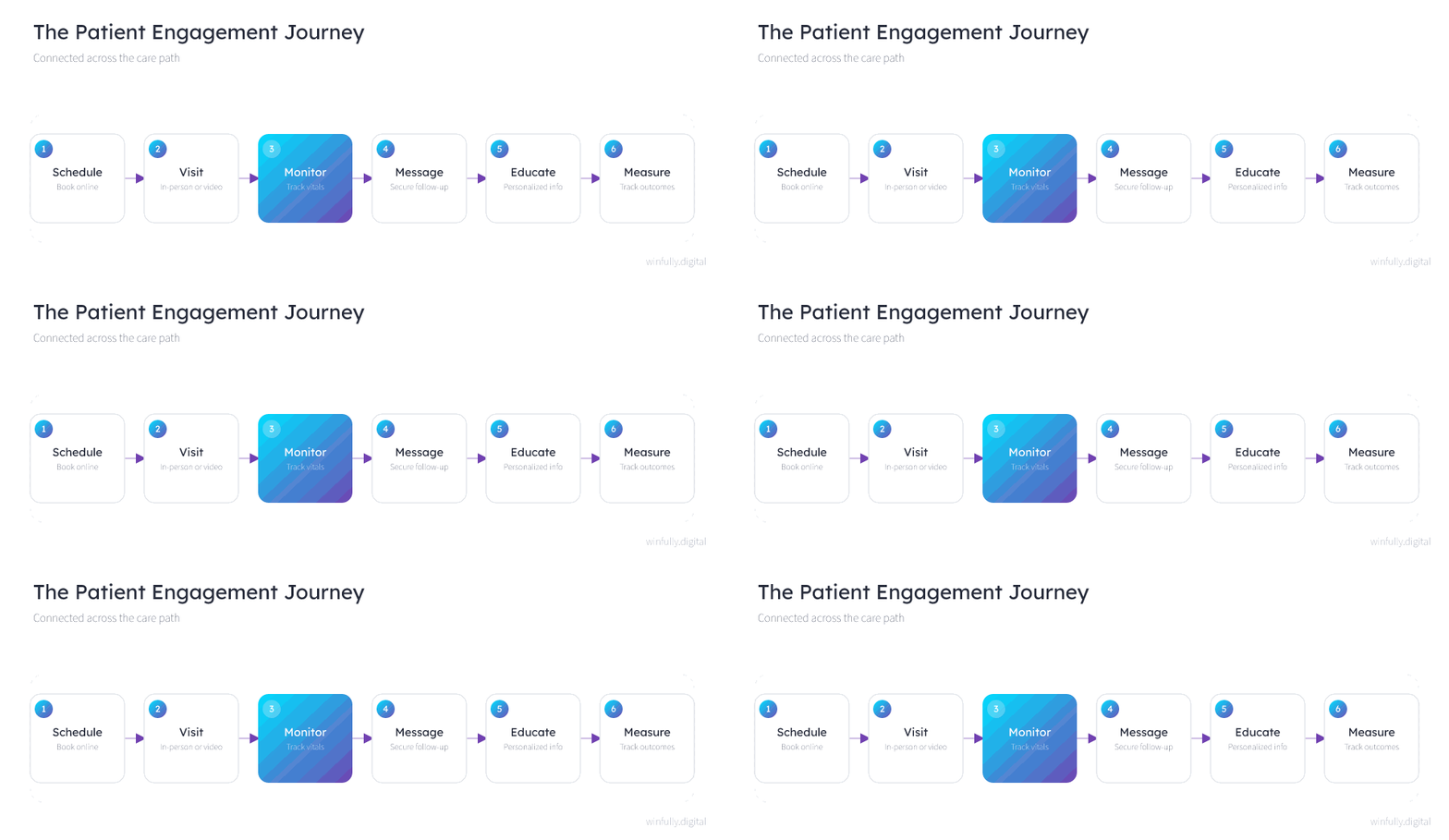
The animation below follows a patient across that connected care path, showing where each digital touchpoint keeps them engaged.
Measuring Success and ROI
Patient Satisfaction Scores
Regular surveys give you both the numbers and the stories behind patient satisfaction. Where engagement is high, the feedback usually follows: better ratings, stronger online reviews, more referrals by word of mouth.
Clinical Outcomes
Watch the clinical markers that matter, like blood glucose or blood pressure, and you can see whether the engagement tools are actually working. A drop in hospital readmissions tells a similar story: outpatient follow-up and chronic disease management are doing their job.
Operational Efficiency
Automate the scheduling, billing, and data entry, and administrative staff get their time back for work that actually needs a person. When those digital workflows are well integrated, clinics tend to see the revenue cycle tighten and overhead come down.
What's Next
Patient engagement is only going to matter more to primary and specialty care. Advances in AI/ML, LLMs, and data-driven personalization are already changing how clinics communicate with, educate, and treat their patients.
Remote monitoring for chronic conditions, wearable sensors streaming real-time vitals, the list keeps growing. Invest in these tools now and you improve outcomes today while getting ahead of where patient expectations and the market are clearly heading.
Call to Action
Better patient engagement isn't a matter of buying the flashiest app or chatbot. It's a patient-centric approach that ties together AI/ML, interoperability, secure communication, and design people find easy to use. Get the personalized care pathways, real-time feedback, and reliable data sharing right, and primary care and specialty clinics can deliver the kind of service patients now expect, while improving clinical outcomes and running more efficiently.
Ready to transform your patient engagement strategy?
We build digital health solutions that fit your existing workflows and EHR systems rather than fighting them. Contact us or email contactus@winfully.digital to talk through how our work in shared record systems, AI/ML, and interoperability can move the needle on patient satisfaction and clinical results.