
Principles to Guide Robust Digital Healthcare Strategies
Key principles for building patient-centric digital health strategies that blend technology with empathy, equity, and coordinated, meaningful care.
The pandemic forced healthcare to go digital fast, and it exposed how much of that digital layer was thin. Providers are now up against consumers who expect their care to work as smoothly as everything else on their phone, and the first wave of digital tools, useful as it was, barely covered the basics.
The numbers tell the story. In a survey by Experian Health, only 17% of patients and 27% of providers said digitized access had actually improved the experience. More striking, 47% of providers and 21% of patients thought it had gotten worse.
Behind those figures are real frustrations. Patients worry about getting seen in time and booking an appointment without a fight. Providers are running on empty, with 87% pointing to reduced staffing as the main thing holding back good service.
None of this gets fixed with a slicker interface or a smarter algorithm alone. It takes a patient-centered strategy that fits technology around human judgment and care, not the other way around.
Here are some pivotal principles that should guide this journey:
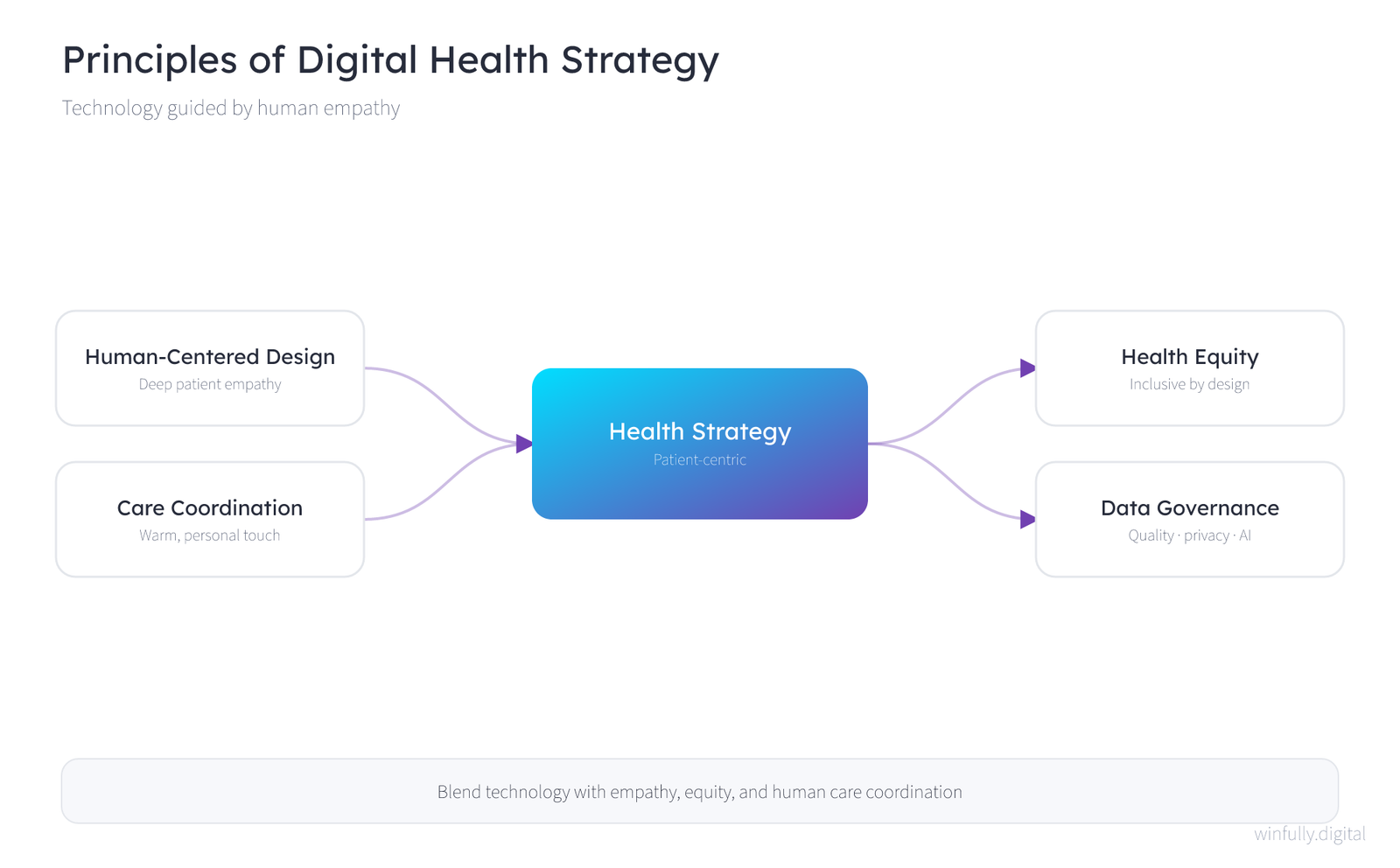
Embrace Human-Centered Design (HCD)
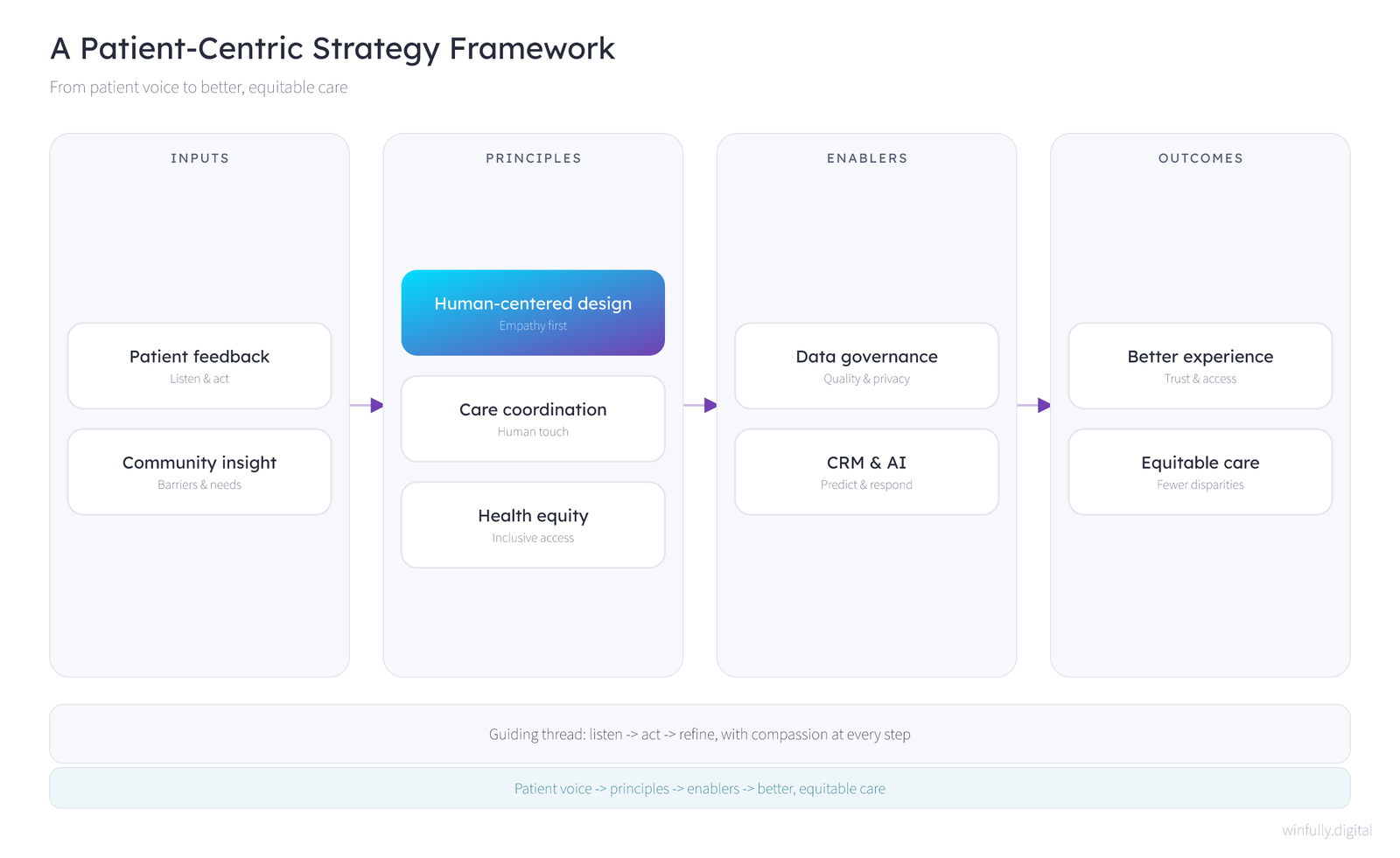
Start with what patients actually need and want, not what the org assumes they need. Traditional approaches tend to carry internal biases that don't survive contact with a real healthcare consumer. HCD isn't a coat of paint on the same old process. It's grounded in genuinely understanding the range of patient experiences and where they hurt.
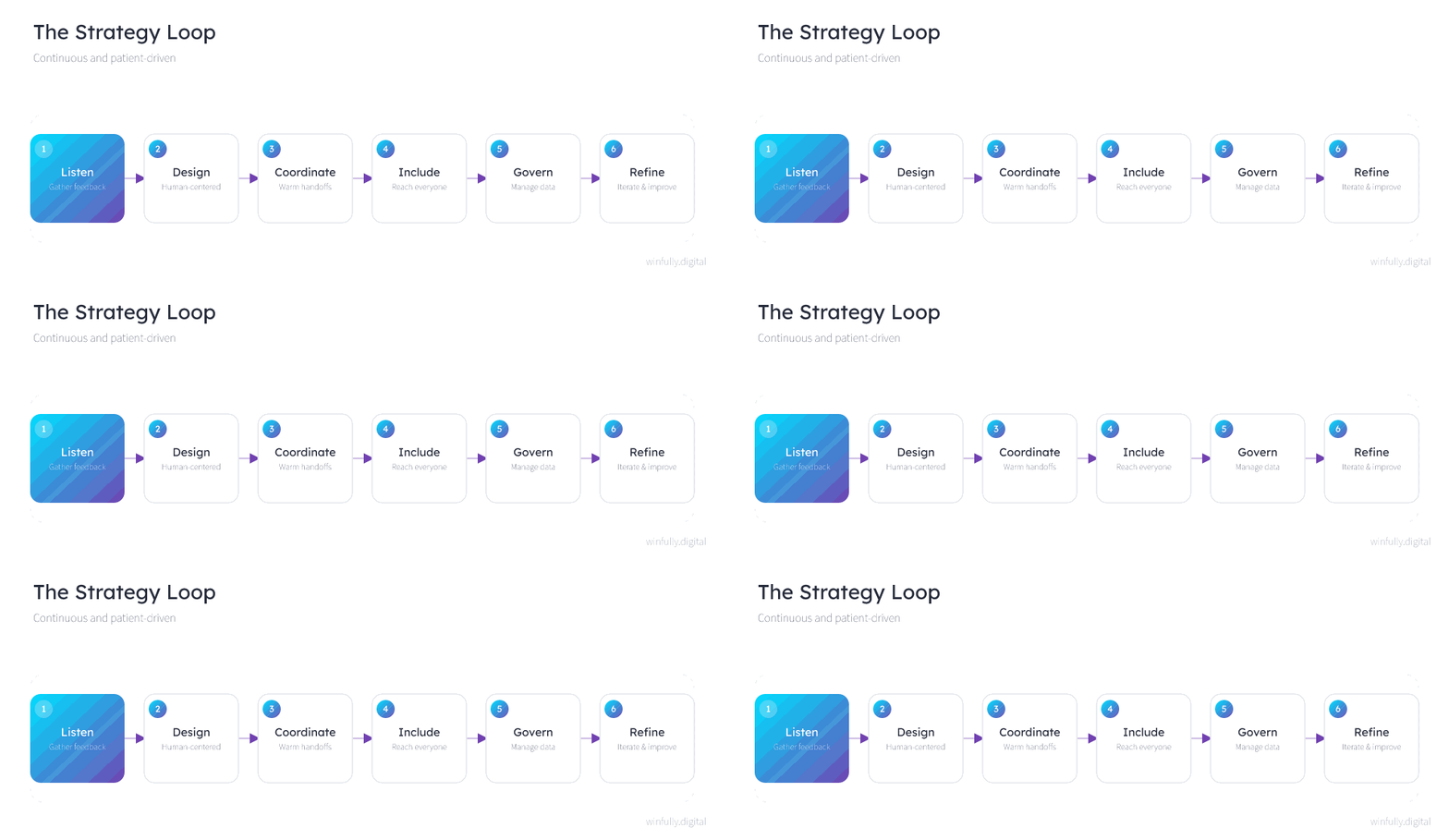
Making it stick means building a culture where patient feedback gets acted on, not just collected. Be honest about where the system falls short, and be willing to rework a solution when the real world tells you to. That loop, listen, build, refine, repeat, is what separates a strategy that serves patients from one that only claims to.
Humanize Care Coordination
Technology should support the human side of healthcare, not stand in for it. As more digital tools pile up, the risk is that care starts to feel automated and cold. Good care coordination isn't only about faster processes. It's about earning patient trust and making people feel looked after.
Use digital platforms to extend the human touch rather than replace it. Automating the routine stuff frees staff for the interactions that matter. Hand appointment scheduling to AI, for example, and your people can spend that time on patient education and support, on the specific concerns that shape someone's health.
Champion Diversity and Health Equity
A digital health strategy has to work for the whole community, not just the people who are easiest to reach. Design only for the majority and you widen the very disparities you should be closing. Underserved communities often need a different kind of outreach, and that belongs in the roadmap from day one, not as a later add-on.
Work with community leaders and local organizations to learn what actually stands in people's way. Put real money behind digital literacy and accessibility. The Ohio State University Wexner Medical Center's outreach program is a good example of how giving people the tools and know-how can genuinely move health equity forward.
Enhance Data Governance
Data governance isn't negotiable when data drives everything you do. Done well, it goes past compliance and security to give you insights you can act on, the kind that make care more personal. Healthcare CRM needs to grow up too, matching the sophistication other industries take for granted, so patient journeys feel predictive and responsive instead of clunky.
Set clear rules for data quality, privacy, and analytics. Treat CRM as relationship management, not just a place to log information. Bring in AI to anticipate patient needs and handle routine outreach, but keep a person in the loop to exercise judgment. And involve your stakeholders, physicians above all, so digital initiatives are built on trust rather than imposed.
A journey-mapping session at Virtua Health puts the human stakes in focus. One patient described a 48-hour wait as "10,000 moments of terror," a line that says more about the anxiety of waiting than any dashboard could. A digital strategy has to stay alert to that, evolving with the technology, yes, but also with a steady commitment to compassion and equity.
Healthcare is dynamic and deeply personal, so providers have to stay ready to adjust course, keeping these principles in view, so that every technical gain shows up as a real improvement in how patients are cared for.
The animation below captures this work as a continuous loop, the ongoing cycle of listening, designing, and refining that keeps a strategy patient-driven over time.
Navigating the Digital Health Transformation? We're Here to Help!
A digital health strategy is complex and high-stakes, and no organization should have to figure it out alone. With 18 years in healthcare IT consulting, our team can guide your institution through every phase of the work.
To talk through how we can help, contact us to schedule a consultation.
Whether the challenge is human-centered design, care coordination, health equity, or data governance, we work to make sure your strategy is sound and true to your mission and the communities you serve.
Every provider's situation is different, so we build solutions around your specific challenges and goals. Let's talk about how to turn these principles into a plan that advances the technology and the care behind it.