
Significance of Health Information Exchange (HIE) in Achieving Interoperability
How Health Information Exchange (HIE) enables seamless data flow across providers, driving interoperability and collaborative, comprehensive care.
Health Information Exchange (HIE) is what lets a patient's record follow them from one provider to the next instead of getting stuck in whatever system created it. That kind of interoperability has stopped being a nice-to-have; care teams now depend on it. This article looks at how HIE works and why it has become the connective tissue of modern healthcare.
The Foundation of Interconnected Healthcare
Providers want one thing from their systems: a patient's information should be there when they need it, wherever they happen to be treating that patient. HIE makes that possible, moving records between organizations that would otherwise never talk to each other. Here is what it does and why it matters.
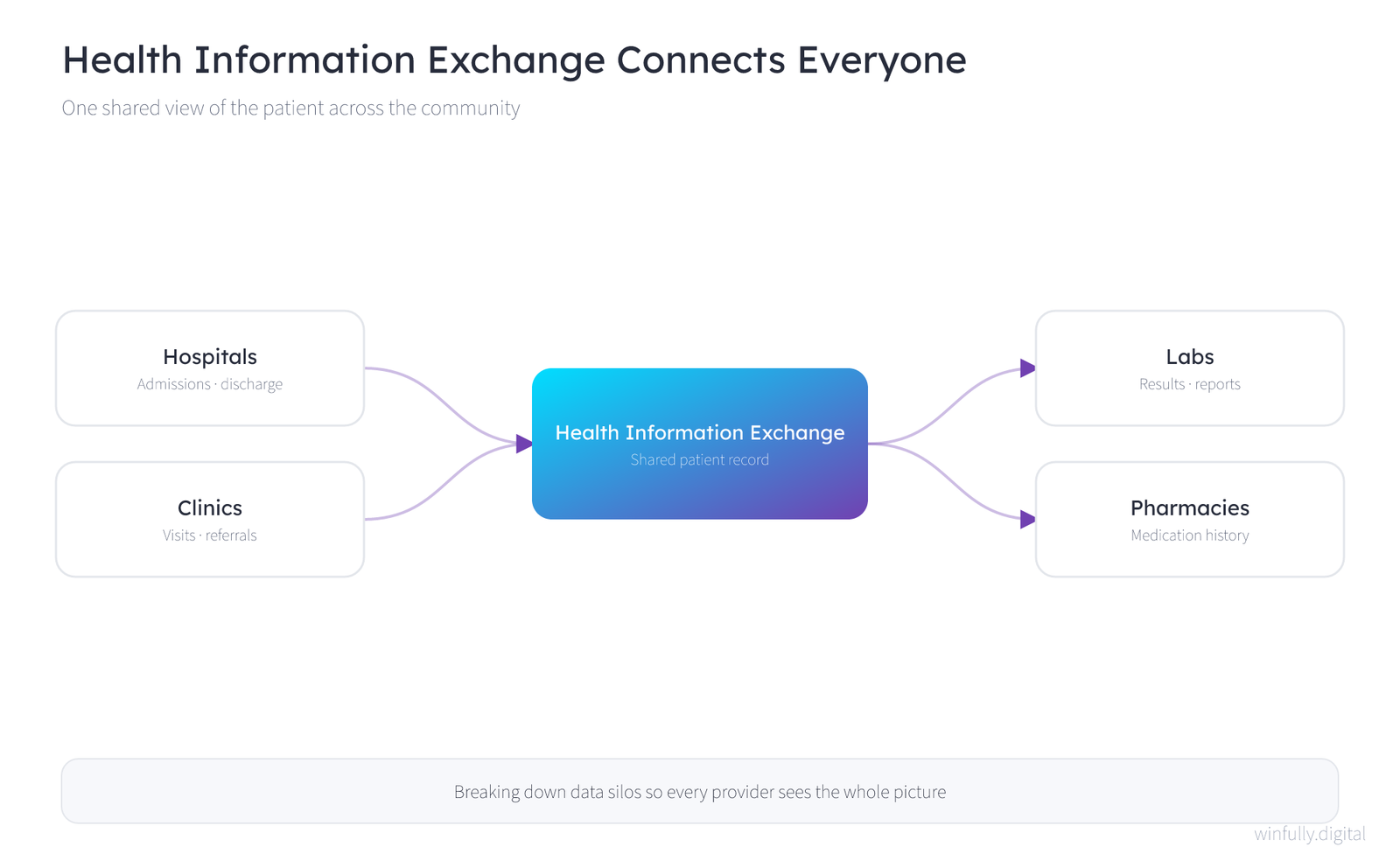
Enhancing Collaboration through Data Exchange
At its core, HIE moves medical data between the organizations that need it, hospitals, clinics, and labs, and puts the right information in front of authorized staff the moment they need it. Decisions happen faster, and a patient's care team can work from the same facts instead of each piecing the story together separately.
Breaking Down Silos for Comprehensive Care
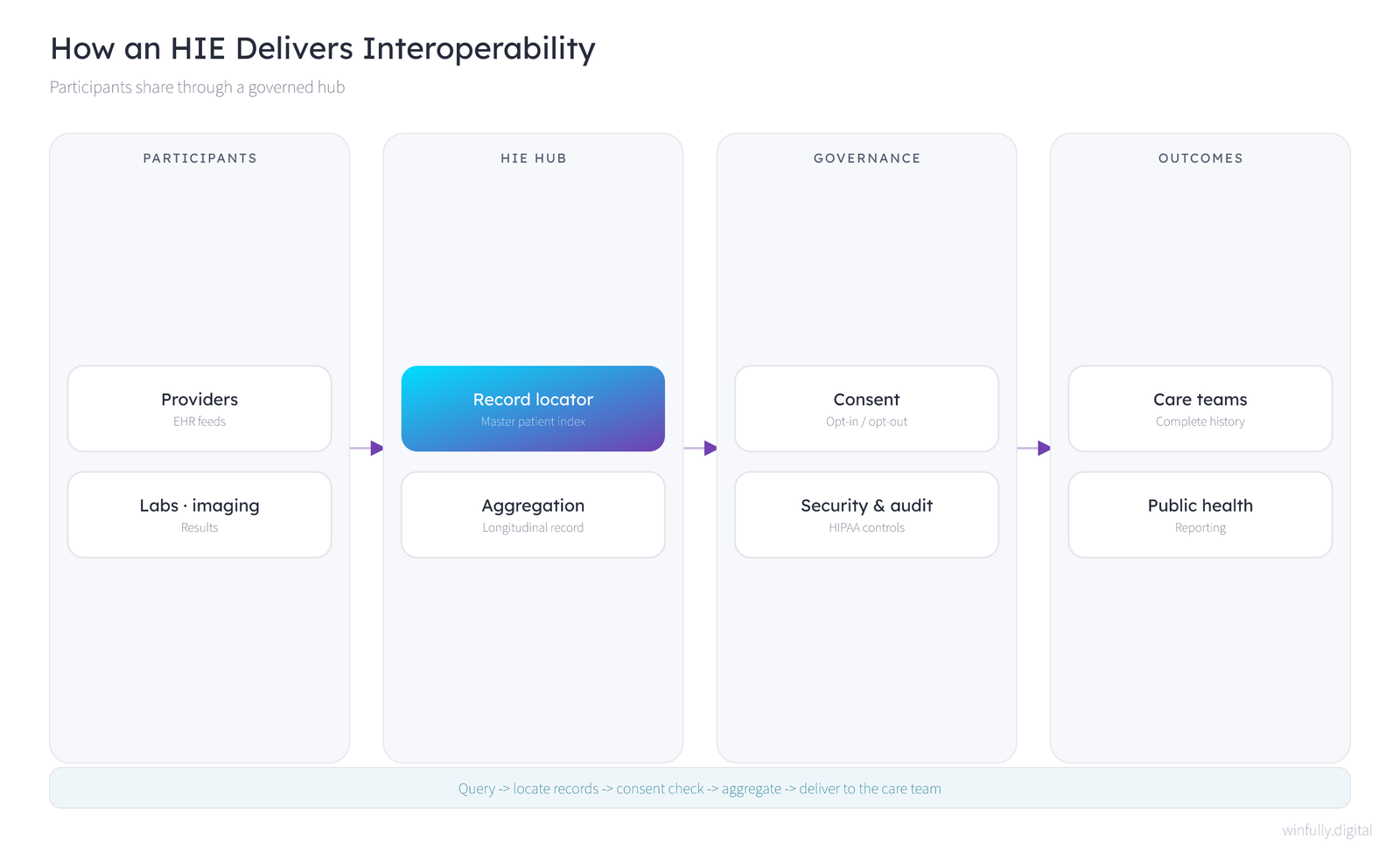
For years, patient data sat locked inside whichever organization collected it, and getting it anywhere else meant faxes and phone calls. HIE breaks those walls down. A provider can pull up a patient's full history, diagnostic reports, and treatment plans in one place, then decide with the whole picture in view rather than a fragment of it.
Accelerating Treatment with Real-time Information
In an emergency, minutes count, and so does knowing a patient's allergies, medications, and history before you act. HIE delivers that data in real time, whether the setting is a trauma bay or a routine follow-up. The clinician works from current, accurate information instead of guessing or waiting.
The SEO Impact: Unlocking the Potential
HIE's value reaches well past any single visit. Once records flow freely, the same connected data supports population health reporting, quality measurement, and research, work that simply is not possible when information stays trapped in separate systems. Much of that potential is still untapped, which is exactly why interoperability keeps climbing the industry's priority list.
Integrating Keywords for Search Engine Visibility
Getting an exchange to work in practice comes down to integration, and integration depends on shared standards. When participating systems speak common formats like HL7 and FHIR and map their data to agreed terminologies, records stay readable as they cross organizational lines. Skip that shared vocabulary and the exchange just ships data no one on the receiving end can actually use.
Establishing Authority in Healthcare Niche
An exchange only works if participants trust it, and that trust is built on governance. Clear rules for who can see what, verified provider identities, patient consent, and an audit trail on every lookup are what make the difference. A well-governed HIE becomes the authoritative source clinicians turn to when they need a record they can act on with confidence.
Enhancing User Experience with Engaging Content
For the people using it, an exchange succeeds or fails on experience. Clinicians will not hunt through a clunky portal mid-shift, so outside data has to surface inside the tools they already use, cleanly summarized and quick to scan. When retrieving a record takes seconds instead of phone calls, providers actually use the exchange, and patients stop repeating their history at every new door.
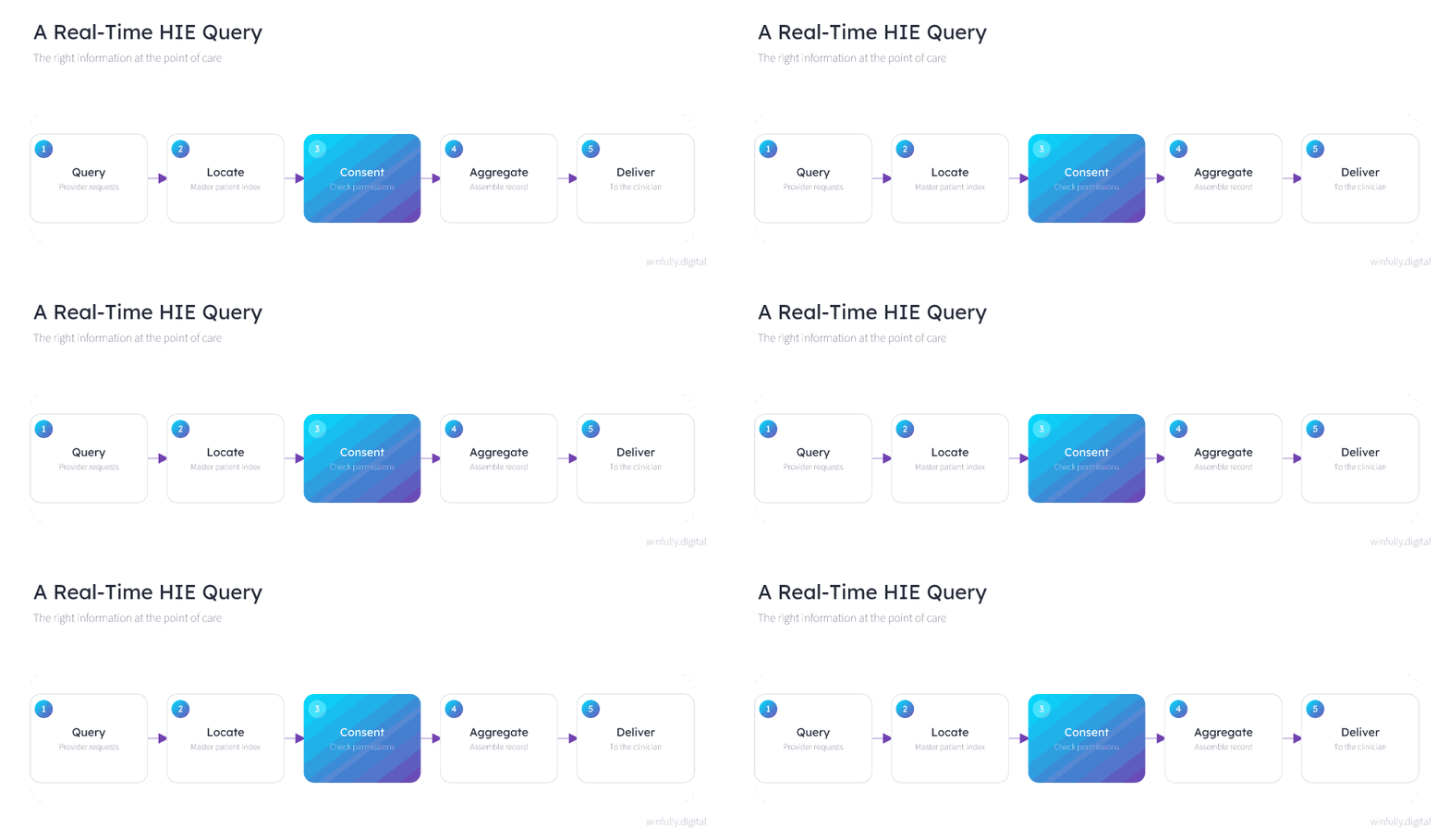
The animation below traces a real-time HIE query delivering the right information at the point of care:
Conclusion: Empowering Healthcare through Interoperability
Health Information Exchange has become the backbone of connected care. It shortens the path between a question and the record that answers it, keeps care teams working from the same facts, and turns scattered data into something clinicians can act on. Get the standards, governance, and everyday experience right, and the exchange stops being infrastructure people tolerate and becomes infrastructure they rely on.