
Transforming Healthcare with Agentic AI
How autonomous agentic AI is transforming healthcare through clinical decision support, personalized care, and greater operational efficiency.
Introduction
Agentic AI has moved from research demos into working healthcare operations faster than most people predicted. Drop autonomous, goal-oriented systems into the right workflows and they change how care gets delivered, how clinicians reach decisions, and how much administrative weight staff carry. The catch is who you build with. Pick the wrong partner and the project stalls before it proves anything.
Below we walk through what agentic AI actually does in a clinical setting, where it pays off, and how to choose a technology partner, whether you run a single clinic or a multi-state system.
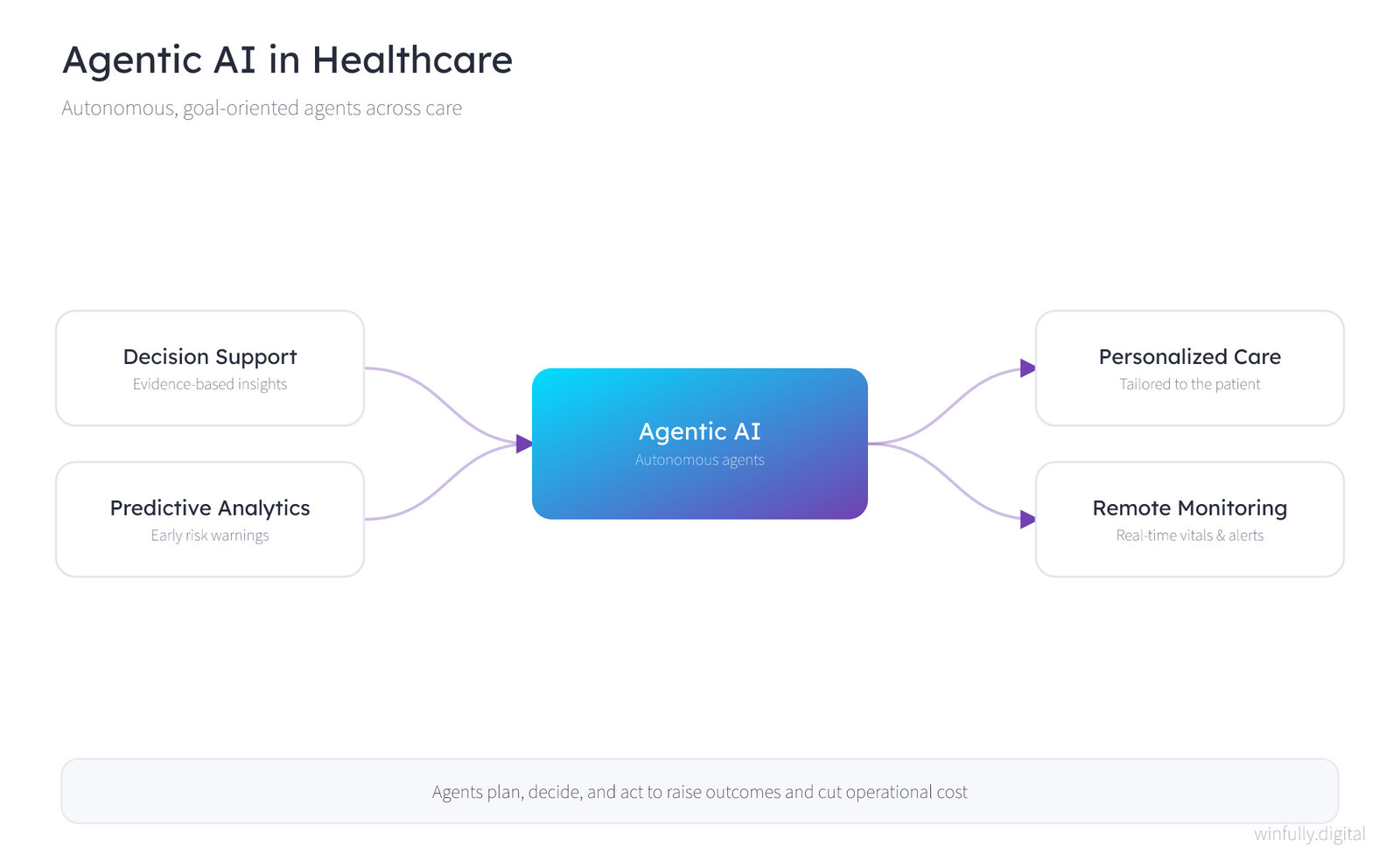
What is Agentic AI?
Agentic AI refers to artificial intelligence systems capable of autonomous actions, decision-making, and adapting to their environments. In healthcare, these capabilities enable:
Clinical Decision Support (CDS)
Agentic systems give physicians decision support grounded in far more data than anyone can hold in working memory. They read across patient histories, lab results, and imaging, then surface likely diagnoses and treatment options. A few concrete examples:
- AI algorithms can flag potential drug interactions based on a patient's medications and conditions.
- Machine learning models help predict patient outcomes and recommend interventions.
- CDS tools powered by AI assist in the early detection of diseases like cancer by analyzing medical images or genetic data with precision.
The payoff is fewer diagnostic misses, decisions backed by evidence rather than recall, and clinicians who can move faster without cutting corners.
Personalized Patient Care
Care rarely fits every patient the same way. Agentic AI reads an individual profile, genetics, lifestyle, history, and shapes treatment around that person instead of a population average. For example:
- AI systems can recommend personalized medication dosages, minimizing side effects and maximizing effectiveness.
- Machine learning models can identify which patients might benefit from advanced therapies like immunotherapy.
- Wearable devices and AI integration track patients' real-time data, such as glucose levels or heart rhythms, to adjust care dynamically.
Patients who feel the plan was built for them tend to stay engaged, stick with treatment, and live better for it.
Predictive Analytics
The real value of prediction is time. Spot a problem early and you can act while the intervention is still cheap and effective. Key applications:
- Chronic Disease Management: AI predicts disease progression in conditions like diabetes, hypertension, or COPD, enabling proactive care strategies.
- Hospital Resource Allocation: Forecasting patient admissions and resource needs to prevent bottlenecks and optimize staff schedules.
- Complication Prevention: Identifying patients at high risk of complications, such as sepsis, following surgeries or hospitalizations.
Catching trouble early improves outcomes and spares the expense of late-stage, crisis-driven care.
Automated Workflows
Paperwork is one of the biggest drains on clinical time. Agentic AI takes over the routine parts:
- Medical Coding and Billing: Automating complex billing codes based on patient records, reducing errors, and accelerating claim processing.
- Appointment Scheduling: Intelligent systems schedule, reschedule, or optimize appointments to reduce wait times and no-shows.
- Document Management: AI-powered tools can extract relevant data from unstructured documents like physician notes or lab reports, streamlining workflows.
Hand these tasks off and clinicians get time back for patients, which is also one of the most direct ways to cut burnout.
Remote Patient Monitoring (RPM)
Care no longer stops at the clinic door. Agentic AI watches patients at home in real time and flags trouble before it becomes an emergency. Examples:
- Chronic Disease Monitoring: Devices equipped with AI, like smart glucose monitors, track patient vitals and alert providers to anomalies.
- Tele-health Integration: AI-powered tools support virtual consultations by analyzing patient data and summarizing key health metrics for clinicians.
- Emergency Alerts: Wearable devices can detect critical events, such as falls or cardiac arrests. They immediately notify caregivers or emergency services.
Continuous monitoring and early action cut readmissions, keep patients happier, and hold care together between visits.
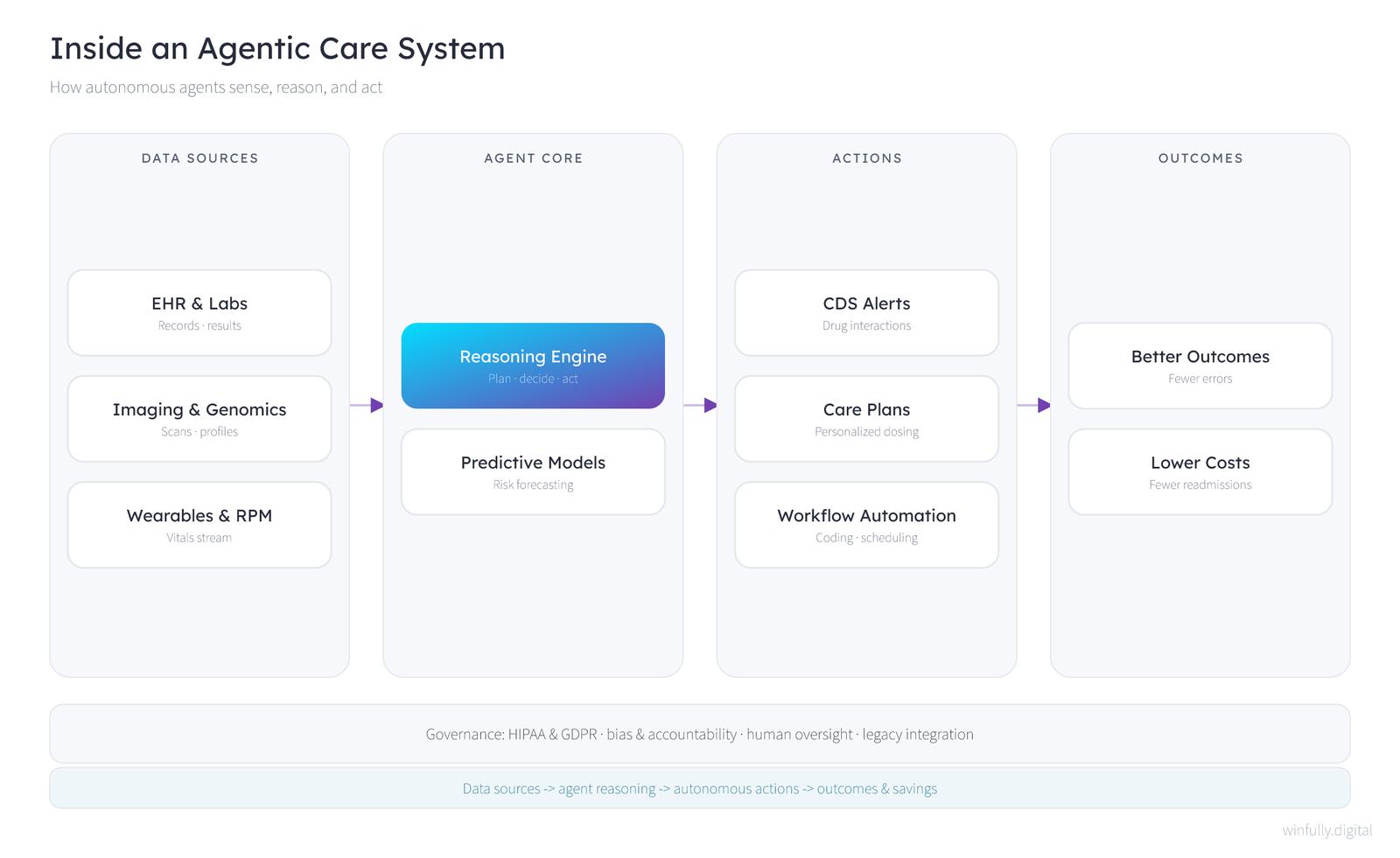
The Transformative Potential of Agentic AI in Healthcare
- Operational efficiency: Automate the repetitive work, scheduling, claims, resource allocation, and staff get their hours back for higher-value tasks.
- Better patient outcomes: With more clinical data behind each call, these systems help catch disease earlier, sharpen diagnoses, and tailor interventions, which means fewer errors.
- Lower costs: Spotting at-risk patients early lets you intervene before the ER does, which brings down emergency spending and readmissions.
Challenges in Implementing Agentic AI
Despite its potential, adopting Agentic AI in healthcare comes with challenges:
- Data Privacy and Security: Protecting sensitive patient data while adhering to regulations like HIPAA and GDPR.
- Integration with Legacy Systems: Getting new tools to work with infrastructure that predates them.
- Ethical Considerations: Addressing concerns about AI autonomy, bias, and accountability.
- Change Management: Ensuring staff buy-in and minimizing resistance to new technologies.
Evaluating the Agentic AI Tech Landscape
The Agentic AI ecosystem features four key provider categories:
- Hyperscalers: Microsoft, Google, and AWS bring scalable frameworks and deep infrastructure.
- Pureplay Providers: Startups delivering specialized, innovative solutions tailored to specific use cases.
- Enterprise Platforms: CRM and ERP leaders such as Salesforce and ServiceNow incorporate Agentic AI into their ecosystems.
- Intelligent Automation Providers: Companies like Autosmic, UiPath and Kore.ai integrate AI-driven automation tools into broader workflows.
Each brings different strengths. The right fit comes down to matching what a provider does well against what you actually need to accomplish.
The WinFully on Technologies Advantage
WinFully on Technologies helps healthcare organizations put agentic AI into production. We build custom AI, integrate it with the systems you already run, and hold it to the compliance standards the work demands, with measurable results as the goal.
Our Key Offerings:
- Tailored AI Solutions: Addressing specific healthcare challenges, from patient care optimization to operational automation.
- Compliance-Driven Implementation: Adhering to HIPAA, HITECH, and GDPR standards.
- Integration That Fits: Adding AI to your existing systems with minimal disruption.
- Ongoing Support: Regular updates, training, and performance optimization.
The diagram below traces the staged path we use to implement agentic AI, from assessment through to scale:
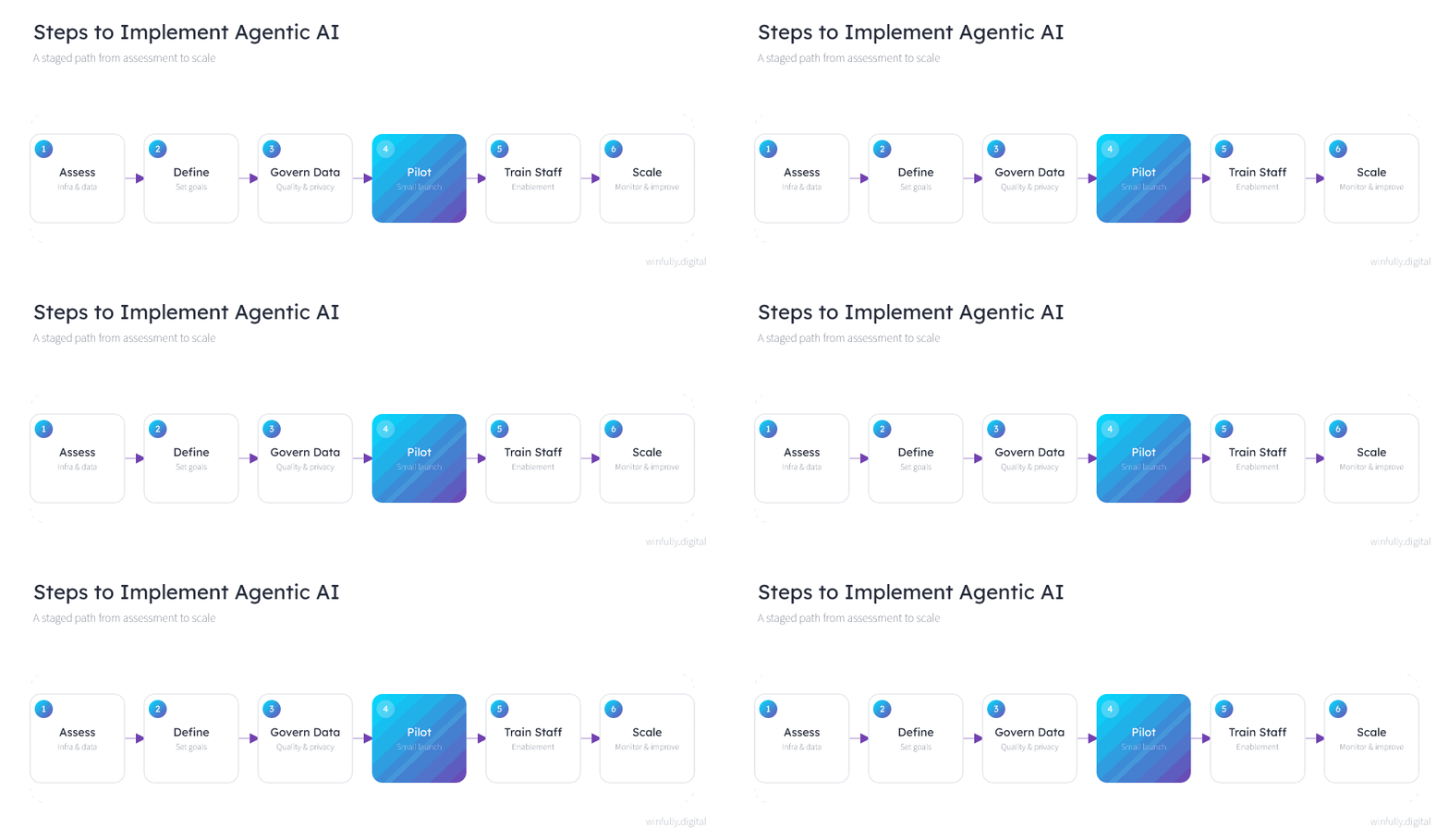
Steps to Successfully Implement Agentic AI
- Assess Current Infrastructure
Evaluate existing systems, workflows, and data management practices to identify AI implementation opportunities. - Define Clear Objectives
Establish specific goals, such as improving patient outcomes, reducing operational costs, or enhancing diagnostic accuracy. - Prepare and Govern Data
Implement strong data governance policies to ensure quality, privacy, and compliance while preparing data for AI analysis. - Pilot and Evaluate
Start small by launching a pilot project. Use feedback to refine the implementation process before scaling up. - Train and Support Staff
Provide comprehensive training so clinicians are confident using the tools effectively. - Continuously Monitor and Improve
Use key performance indicators (KPIs) to measure AI's impact and collaborate with your technology partner to refine solutions over time.
Conclusion
Agentic AI can make healthcare more efficient, less costly, and better for patients, but only with a clear plan behind it. WinFully on Technologies brings the expertise and hands-on support to get you there.
We design solutions that fit your systems and meet your compliance obligations, so agentic AI actually delivers instead of stalling in a pilot. Work with us and your organization stays ahead of what's coming rather than scrambling to catch up.
Reach out to WinFully on Technologies to start building smarter, AI-driven healthcare solutions.